The City beneath the City: the metro museums of thessaloniki
The Thessaloniki Metro isn’t just a way to skip the Egnatia traffic, it is the world’s largest metro station museum with several stations functioning as living museums. Over 300,000 artefacts were unearthed during construction, and instead of hiding them in dusty warehouses, the city built the metro stations around them.
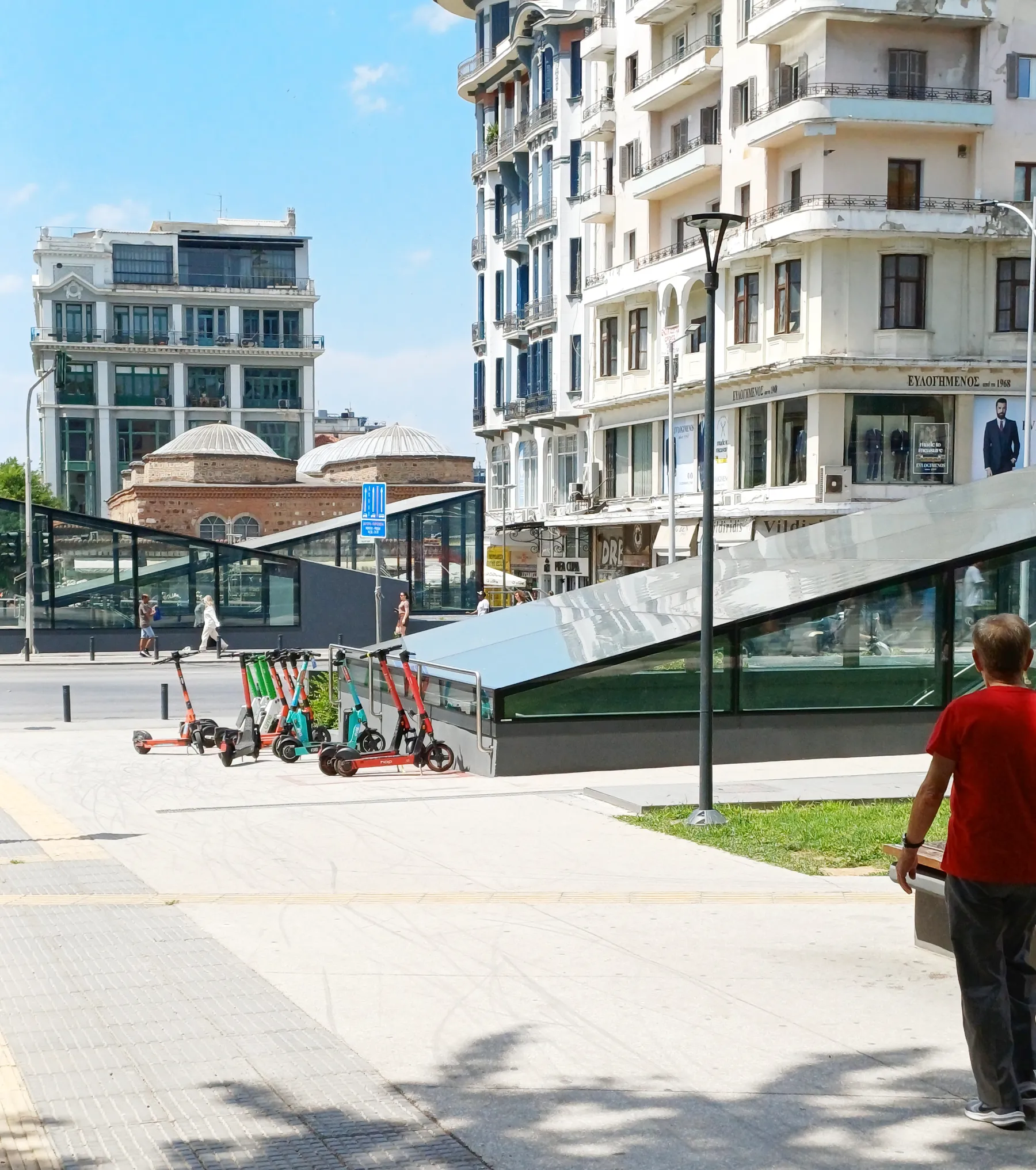
For nearly two decades, Thessaloniki was a city of giant holes and construction fences. In November 2024, the wait was finally over and the metro of Thessaloniki was a fact.
Due to very complex underground engineering to avoid damage to the hundreds of thousands of archeological treasures that were constantly excavated while building the metro stations, it took 22 years and over 3 billion euros to complete the current 10 kilometer track. Close cooperation between archeologists and engineers resulted in metro tubes being placed from 14 to 30 meters below ground level and one metro line with 13 stations, hi-tech driverless trains and metro stations that according to the German media are “one of the most beautiful in the world” and they certainly are the most modern in Europe.
Thessaloniki Metro & Archaeology
Thousands and thousands of archaeological artefacts were found in the earth, especially beneath the metro stations Venizelou and Agia Sofia. The reason this area is so densely packed with ancient Greek treasures is that it’s located at a crossroad where the current Egnatia Street meets a main road of ancient Thessaloniki that existed from the time of its founding by King Cassander (a general of Alexander the Great) in 315 BC.
Egnatia street has been a primary, historic thoroughfare following the path of the ancient Roman Via Egnatia (built c. 2nd century BC), which connected the Adriatic Sea to Byzantium. As a central commercial and, later, urban artery, it has maintained its vital role in the city’s trade, culture, and transport for over 2,000 years.
The Decumanus Maximus (major east-west Roman/Byzantine road) and the Via Egnatia (major Roman highway) are largely synonymous in Thessaloniki, with the Decumanus Maximus representing the city-segment of the latter.
The excavated Roman avenue that was found 6 meters below modern Egnatia Street is the Decumanus Maximus, acting as the local, urban, and later Byzantine phase of the broader Via Egnatia road.
What used to be called Decumanus Maximus in old times is now called simply Egnatia Street and it’s still a main artery and one of the busiest streets of Thessaloniki.
The different roads that ran through Thessaloniki from east to west and from north to south during the many different eras of the city’s history and its buildings, had been built on top of each other. Hence, ancient artefacts from a period of over 2000 years were excavated by archeologists: gravel-paved roads, marble-paved roads, colonnaded arcades, mosaic floors, marble arches, building complexes, squares, fountains, statues, metalwork, glasswork, ceramics, jewelry, etc. All these findings had to be carefully uncovered, registered and taken care of. No wonder it took so long for the metro to be built!
These are the metro museums in Thessaloniki you cannot miss:
Venizelou metro Station: The Underground Pompeii
This is the crown jewel of the metro museums in Thessaloniki, featuring a 3,500-square-meter in situ archaeological site. It is essentially a living museum where the modern station was built around the ruins.
What can you see at the Venizelou metro station?
- Walk onto the platform and look through the glass floors. You’ll see the Decumanus Maximus (the main Roman road) or Mese Odos (as it was called during Byzantine times). The section is 77 meters long.
- The Byzantine Market and Byzantine-era shops preserved exactly where they were found. It’s complete with ancient shopfronts, drainage systems, and the literal wheel ruts of carts from 1,500 years ago.
- Artefacts: everyday items like jewelry molds, pottery, and coins.
Because of the exceptional preservation of the road and the buildings, it is considered the centerpiece of the “Byzantine Pompeii”.
The transition from the modern street level to the Byzantine level (5.4 meters down) feels like actual time travel.
Agia Sofia metro Station: The Luxury Quarter
Just 800 meters away, Agia Sofia station offers a different vibe. While Venizelou was the commercial heart, this area was for the elite.
Sights at the Agia Sofia metro station:
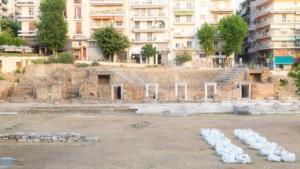
- Look for the Semicircular Marble Plaza. This was a massive public marble-paved semicircular plaza where the city’s wealthy would socialize.
- You can also see remains of a luxurious late-antique villa with intricate heating systems (hypocausts) and walls that once held grand mosaics.
- Don’t miss: The “stratigraphy wall”. It’s a vertical slice of earth showing how the city layers (Hellenistic, Roman, Byzantine, Ottoman} literally sit on top of each other.
- The nymphaeum: a fountain which used to quench the thirst of travellers and residents traveling along the road.
- Byzantine Infrastructure: remains of complex drainage systems, clay pipes, and brick-built vaulted structures.
Dimokratia metro Station: tombs & Gold jewelry
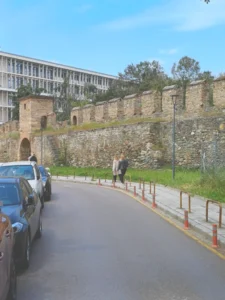
The Dimokratia metro station is located near the western walls and the “Golden Gate”, which was the western entrance to the ancient city.
Things to see at the Dimokratia metro station:
- The Western cemetery: various types of Hellenistic and Roman tombs, altars, and a large inscribed marble tomb. One of the tombs found here contained gold jewelry that looks like it was made yesterday.
- Ancient warehouses for the storage of wine and olive oil.
- At the south entrance, two large marble columns from the Byzantine period have been re-erected.
Fleming metro Station
The Fleming metro station is located east of the center of Thessaloniki. This station provides a look into the suburban and burial rites of Roman Thessaloniki.
What to see at the Fleming metro station:
- Roman Cemetery: The primary exhibit here is a section of a Roman-era cemetery.
- Funerary Art: you can see various types of graves and funerary stelae (grave markers) that provide insight into the social hierarchy and burial customs of that time.
Future Dedicated Museums
To house the sheer volume of additional finds, two dedicated above-ground museums are planned: one at Pavlos Melas Metropolitan Park this project is in “full swing,” funded by the Ministry of Culture with €14.5 million, and another at the Crossover building near Sintrivani (projected 2027).
More Information
On the website of the Thessaloniki Metro you can find information in english about the stations, tickets, opening hours, elevators, and accessibility.