Key Takeaways
- The Byzantine baths of Thessaloniki are the only surviving bathhouse from the Byzantine era in the city and hold UNESCO World Heritage status.
- Constructed in the late 12th or early 13th century, these baths transitioned from a Byzantine loutra to an Ottoman hamam after 1430.
- Despite facing neglect and an earthquake, the baths underwent restoration and reopened in 2015 as a museum and cultural space.
- Visitors can explore the distinct three-room layout, including the Cold Room, Warm Room, and Hot Room, with original architectural features still intact.
- The Byzantine baths are rare in Greece, making them a significant architectural survivor and a unique window into historical public bathing culture.
Table of contents
From Byzantine baths to Turkish Hamam
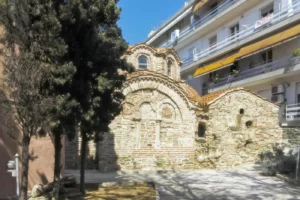
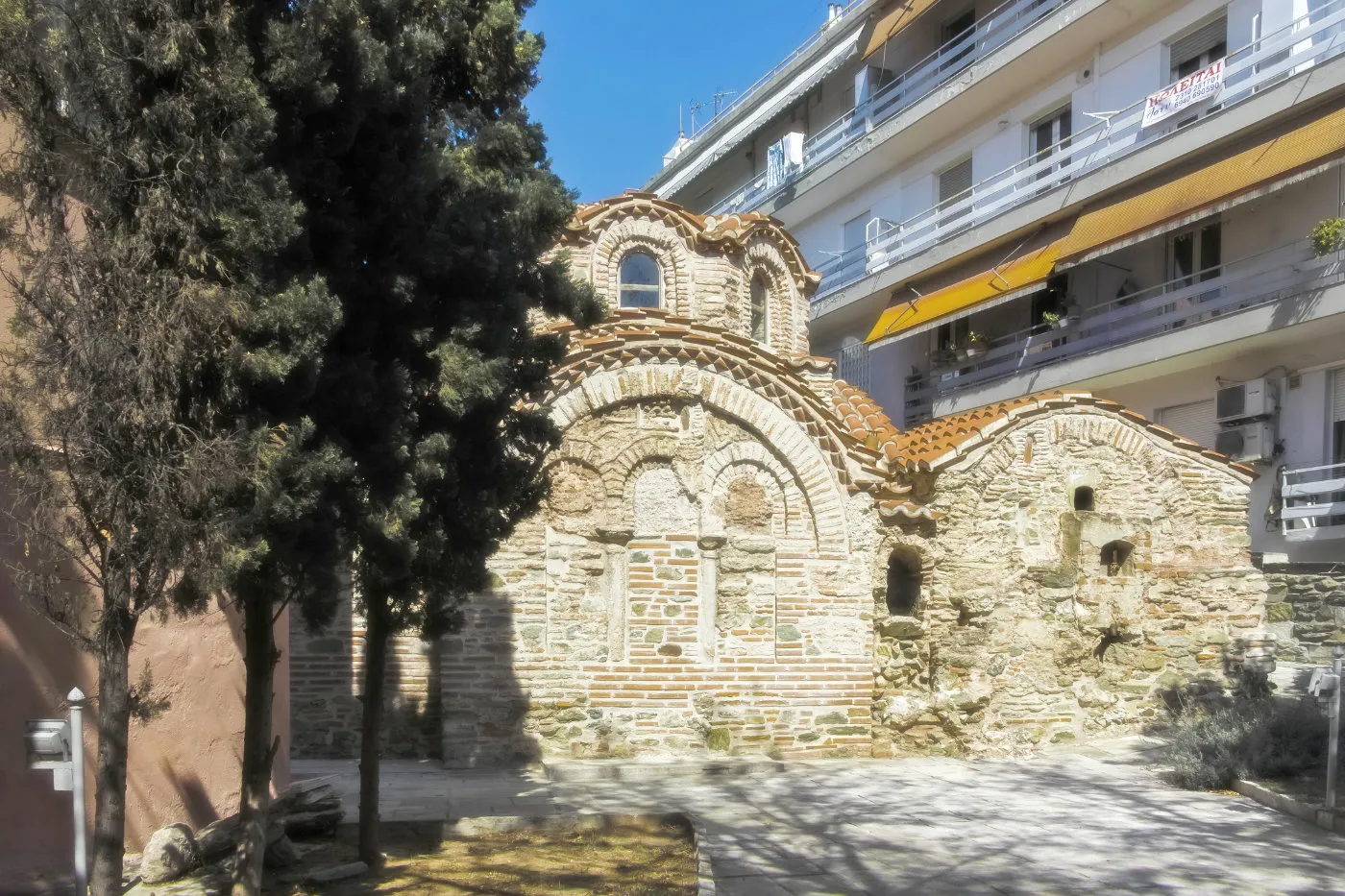
While Thessaloniki boasts massive, famous walls and towering churches, tucked away on the junction of Theotokopoulou and Krispou Street in the Upper Town (Ano Poli) sits a smaller, humbler architectural gem: the Byzantine baths of Thessaloniki.
As the only surviving Byzantine-era bathhouse in the entire city, and the most complete of its kind in Greece, this UNESCO World Heritage site offers an intimate look into centuries of daily life.
A Thousand Years of Steaming History
Architects date the construction of these baths to the late 12th or early 13th century. Because historical records from the Byzantine Empire don’t mention them explicitly, historians believe they originally belonged to a nearby monastery complex. Public and semi-private bathhouses were essential hubs in Byzantine society; people visited them not just for hygiene, but for relaxation, socializing, and escaping the bustling city streets.
When the Ottomans captured Thessaloniki in 1430, they didn’t tear down the bathhouse. Instead, they embraced it, renaming it Kule Hamam (the “Bath of the Citadel”) because of its proximity to the fortress walls.
The transition from a Byzantine loutra to an Ottoman hamam brought a major shift in how people bathed.
The Byzantine Era: Men and women used the baths alternately on different days or times. The interior layout allowed bathers to move freely between the rooms.
The Ottoman Era: Strict cultural customs demanded total separation. To accommodate this, the Turks structurally divided the building into exclusive, isolated male and female sections by blocking off the interior doorways between the twin sets of rooms.
Byzantine Baths of Thessaloniki – The survival
Remarkably, this small neighborhood bath outlasted empires. The Turkish baths of Thessaloniki usually saw massive structural overhauls, but the Kule Hamam kept its core design intact.
It functioned continuously for nearly 700 years until 1940, when the hardships of World War II and the German occupation finally forced it to close.
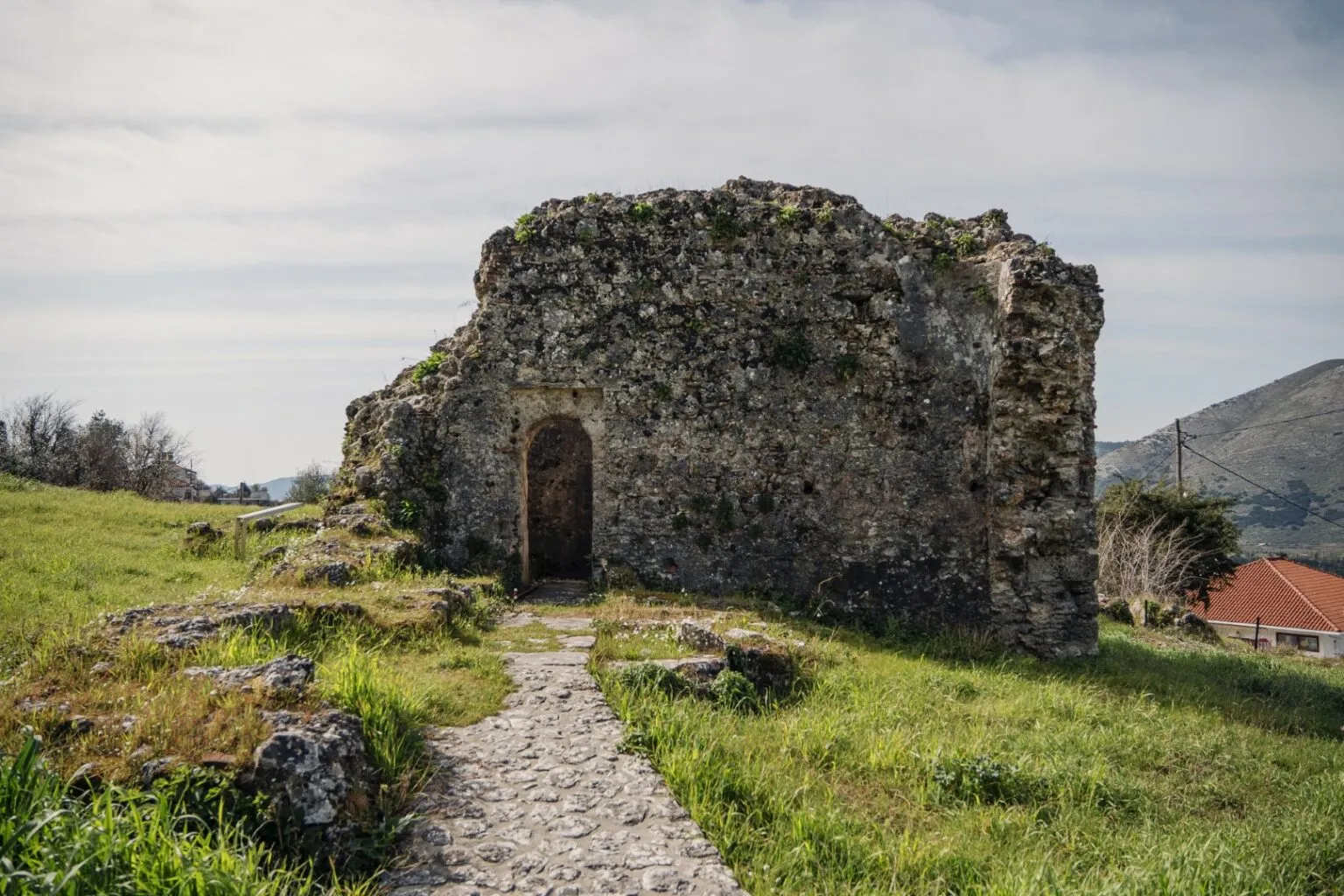
After its closure, the building fell into deep neglect. The devastating 1978 Thessaloniki earthquake nearly brought the structure down. For decades, it only remained standing thanks to heavy scaffolding and a protective external metal sheet installed by archaeologists.
Recognizing its immense historical value, UNESCO added it to its World Heritage list in 1988. Following a meticulous, four-year restoration project by the Ephorate of Antiquities, the site finally reopened to the public in June 2015 as a museum and cultural space.
What Is Left to See Today?
The architecture of the Byzantine baths perfectly mimics the traditional layout of ancient Roman baths, scaled down to a neighborhood size. When you visit, you can clearly trace the three-room journey that bathers took to condition their bodies to the heat:
The Cold Room: Located at the southern entrance, this rectangular space served as the changing room and antechamber.
The Warm Room: Two vaulted middle chambers where the body began to acclimate to the warmth.
The Hot Room: The main attraction. These two square rooms feature an underground hypocaust system, where hot air circulated beneath the floors. One room boasts an impressive dome supported by an octagonal base with eight windows to let in natural light, while the other features a beautifully domed ceiling.
Just north of the main building, you can still see the original stone cistern that supplied the water, right above the hearth that heated it.
Byzantine Baths in Greece
Finding intact Byzantine baths in Greece is incredibly rare. While the country features plenty of later, grander Ottoman baths, like the massive Bey Hamam (the “Baths of Paradise”) down in central Thessaloniki, true Byzantine examples are scarce.
Aside from this complete structure in Ano Poli, only a handful of ruined public baths exist elsewhere in the country, such as small remnants in Paramythia and Ioannina. This makes the Upper Town bathhouse an architectural survivor of epic proportions.
Essential visitor information for the Byzantine Baths
Location
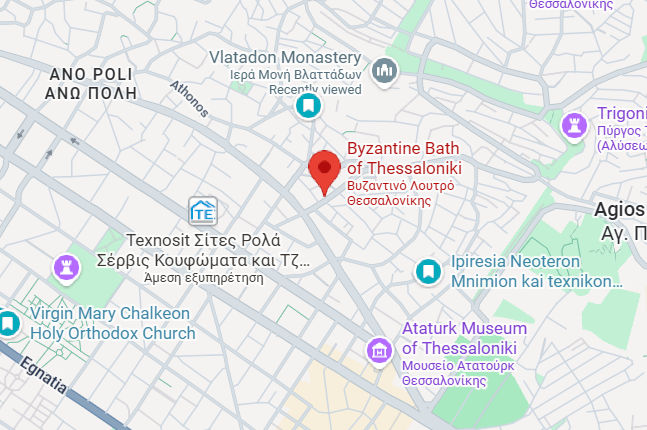
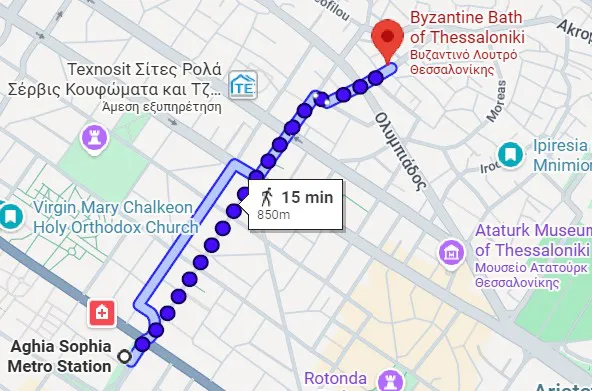
Theotokopoulou & Krispou Street, Ano Poli, Thessaloniki.
Opening Hours
The monument operates on a limited schedule, typically opening to the public on Fridays from 10:00 AM to 1:00 PM (though it’s always wise to double-check with the local Ephorate of Antiquities before making the climb, as hours can occasionally shift).
Tip: Pair your visit to the Byzantine baths of Thessaloniki with a wander over to the nearby Church of the Taxiarches or the Vlatadon Monastery. It’s the perfect way to spend a quiet morning exploring the medieval soul of Thessaloniki.
Where to stay near the Byzantine Baths
Getting to the historical Byzantine Baths of Thessaloniki from the Twin Leaves apartment is incredibly straightforward:
- A Scenic, Flat Stroll: If you enjoy walking, you can take a pleasant, mostly flat 23-minute stroll through the heart of the city straight to the baths.
- A Quick 15-Minute Transit Route: Walk in just 2 minutes to the main bus stop at Dimokratias Square. Catch bus line 16, ride for about 5 minutes to the Achilleo stop, and enjoy a brief 8-minute walk directly to the monument.