Heritage Built Against the Byzantine Walls
When you stand at the highest point of Ano Poli (The Upper Town) and look out over Thessaloniki, you aren’t just witnessing a beautiful sunset over the Aegean. You are standing on a site of radical resilience.
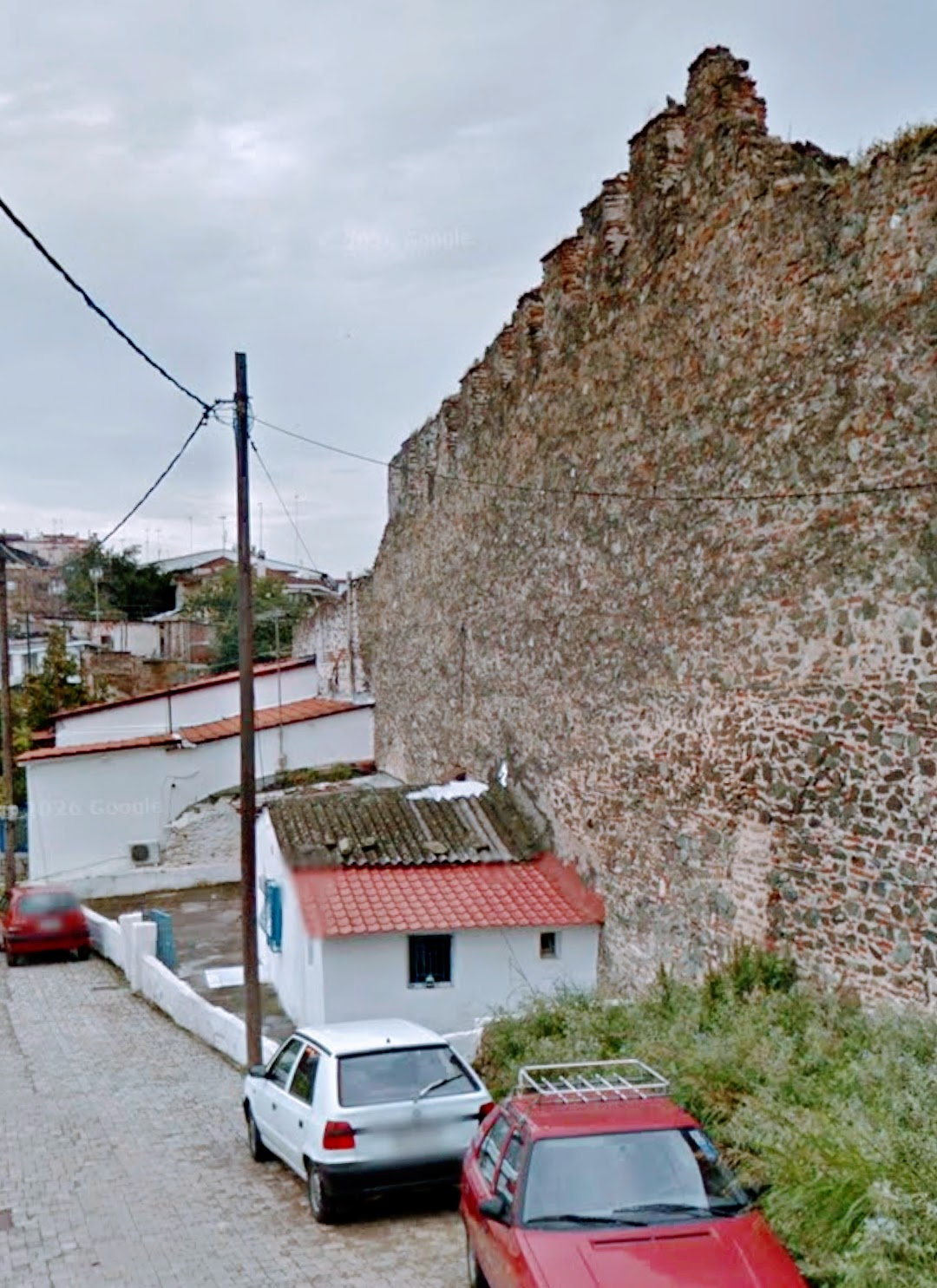
Between the narrow cobblestone alleys with its grapevines, the scented flowers and the towering Byzantine walls, you’ll notice something peculiar: tiny, chalky-white and colorful houses that seem to grow directly out of the ancient stone fortifications.
These are the Kastroplikta, the “houses nested against the castle“. They are the living monuments of the 1.5 million Greek refugees who arrived in 1922 in Greece from Turkey, bringing with them a culture that would transform Thessaloniki into the “Refugee Capital” of the world, but would also make the city what it is today.
Asia Minor Catastrophe & Genocide of the Pontic Greeks
To understand the soul of Thessaloniki, you have to look past the modern cafes and dive into the “Great Catastrophe” of 1922. This wasn’t just a migration, it was the bittersweet end of a 3,000-year-old Hellenic presence in the East.
For over 3,000 years, Greek communities thrived in the Black Sea (Pontus) and Asia Minor (modern-day Turkey). They were the cosmopolitan merchants of Smyrna (Izmir) and the hardy mountain folk of the Pontic Alps. However, between 1914 and 1923, this ancient world came to a violent end.
How Asia Minor & Pontic Greek Refugees Reshaped Thessaloniki
The arrival of these refugees wasn’t just a migration; it was a total demographic transformation. To understand Thessaloniki today, you have to understand the people who arrived on its shores with nothing but the keys to their lost homes and the recipes in their heads.
What are the Kastroplikta? Life Within the Byzantine Walls of Thessaloniki
The Heart of the History: Ano Poli and the “Kastroplikta”
If you’re visiting Thessaloniki, the best place to feel this history of Thessaloniki is Ano Poli (The Upper Town). While the lower city was modernized after the Great Fire of 1917, Ano Poli remained a labyrinth of Ottoman-era houses and Byzantine walls.
The most iconic legacy of the influx of Greek refugees is etched into the very stones of Ano Poli. When the Greek army was defeated in Asia Minor and the city of Smyrna burned, Thessaloniki, already scarred by the Great Fire of 1917, was flooded with desperate families.
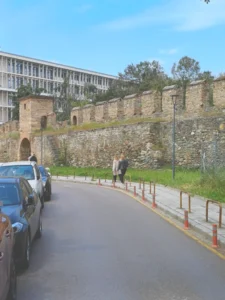
With no housing available, the refugees showed incredible ingenuity. They built the Kastroplikta houses (literally “houses struck by the castle”), directly against or even into the Byzantine Walls of Ano Poli. They were tiny, often just a single room, built with timber and mud brick.
These weren’t just shelters, they were the start of a new life. Today, the narrow alleys where the Kastropliktra houses were built are some of the most beautiful spots in Thessaloniki, offering a quiet, nostalgic escape from the bustling center below.
Highlights of the Kastroplikta houses attached to the old city walls of Thessaloniki:
- The Fourth Wall: To save time and precious materials, refugees used the ancient Byzantine city walls as the rear wall of their homes.
- The Architecture of Necessity: These dwellings were often just one or two rooms, built with whatever was at hand—timber, mud bricks, and scavenged stone.
- A Neighborhood in the Sky: While the Greek government initially viewed these as “slums,” they quickly became tight-knit communities where the traditions of Smyrna and Pontus were kept alive.
Who Were the Refugees? A Cultural Mosaic
The families who built these homes were not a uniform group. They arrived from three primary regions with diverse cultural and economic backgrounds and they brought different dialects, traditions, and skills to Thessaloniki.
The Greek refugees that came from Turkey were:
- Asia Minor Greeks (Anatolian Greeks): Primarily from Ionia (Smyrna/Izmir), Aeolis, and Cappadocia. The Smyrna Greeks were often cosmopolitan, wealthy, and highly educated. In contrast, the Cappadocians were deeply religious and often spoke Karamanli (Turkish written with Greek letters).
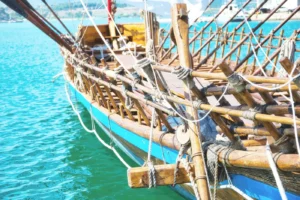
- Pontic Greeks: Hailing from the shores of the Black Sea (Trabzon, Samsun, Sinope). They spoke a dialect close to Ancient Greek, brought a fierce “warrior” folk culture and the haunting music of the Pontic Lyra. In Greek mythology the Black Sea region is the region where Jason and the Argonauts sailed to find the Golden Fleece. The first recorded Greek colony, established on the northern shores of ancient Anatolia, was Sinope on the Black Sea, circa 800 BC.
- Eastern Thracian Greeks: Coming from the European side of the Marmara region. Primarily farmers and merchants who brought rich agricultural traditions to Northern Greece.
A Legacy of Flavors and Music
The refugees didn’t just bring their belongings, they brought a “cultural explosion” that defines Thessaloniki’s DNA today.
The Culinary Revolution
Thessaloniki is widely considered the food capital of Greece. While many of these flavors have Byzantine roots, the refugees democratized and commercialized them, moving them from palace luxuries to everyday street food like Soutzoukakia (traditional spicy, oblong-shaped meatballs served in a rich tomato sauce, distinguished by their heavy use of cumin and garlic).
Bougatsa: The technical, hand-tossed phyllo of the Bougatsa was perfected by the guilds of Asia Minor Greeks who settled in Thessaloniki and Serres and is now considered a breakfast staple in Thessaloniki and northern Greece.
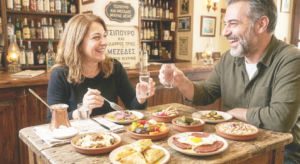
The Meze Culture: The tradition of sipping ouzo over dozens of small plates (mezedes) was a direct import from the cosmopolitan cafes of Smyrna.
While the Greeks of Asia Minor are often credited with Thessaloniki’s “foodie” status, the Pontic Greeks played a massive, equally vital role. The city’s food is inspired by both, although very different traditions.
Traditional Greek Music: The rebetiko
In the refugee camps, a new genre of music was born: The Rebetiko or Greek blues. It was the music of the marginalized: raw, emotional, and deeply soulful. You can still find “Koutoukia” (small basement tavernas) in Ano Poli where local musicians play the bouzouki and sing songs of displacement and hope.
The Great Catastrophe: A Timeline of Displacement
TIn order to understand why these Greeks became refugees and came, amongst other places in Thessaloniki and Greece, to the Upper City of Thessaloniki (Ano Poli), you have to know what was going on in the former Greek areas of modern day Turkey. They suffered a decade of trauma.
The Persecutions (1914–1922): Long before the final exit, life was dangerous. During WWI, Christian men were recruited into Labor Battalions, forced labor units where many died. This period also saw the Pontic Genocide, marked by systematic killings and death marches
The Burning of Smyrna (September 1922): The collapse of the Greek front led to the destruction of the cosmopolitan city of Smyrna (nowadays called Izmir). Hundreds of thousands were trapped on the quays, caught between a massive fire and the sea, while international ships watched from the harbor.
The Convention of Lausanne (1923): The Treaty of Lausanne mandated a “Population Exchange” to end the violence.
The Criterion: It was based strictly on religion, not language.
The Numbers: 1.2 to 1.5 million Greeks moved to Greece and countries like the United States, 400,000 Muslims moved to Turkey.
The Paradox: Many refugees arrived in Greece speaking only Turkish, yet they were legally “returning home.”
Upper Town Historic Sites Demolition and Preservation
For decades, the legal status of the kastroplikta has been defined by a conflict of priorities. Most kastroplikta that were already expropriated or abandoned are currently being torn down. This is intended to eliminate “pockets of neglect,” improve public safety, and finally showcase the Byzantine Walls as a continuous monument.
A very small number, specifically 16 buildings, are earmarked for preservation. These few are intended to be converted into “Refugee Cultural Monuments” to serve as a testimony to the area’s 20th-century history.
The destruction of the kastroplikta remains a point of grief for many locals and historians. While the city views them as “obstructive shacks” that hide a UNESCO monument, many residents and researchers view them as “living heritage”, a physical record of how the city survived and integrated thousands of displaced people.
If you see a house built directly into the wall today, it is either one of the 16 “lucky” ones preserved for museum use, or it is likely scheduled for demolition to make way for the city’s new green belt.
The 16 preserved kastroplikta are not scattered randomly; they are clustered in a specific section of the Northern Walls to create a unified “historical pocket.”
The Primary Location: Eptapyrgiou Street
The vast majority of these preserved structures are located along Eptapyrgiou Street, which runs parallel to the bypass of the Old Town’s northern fortifications.
Specifically, you will find these historic houses in the stretch between:
The Trigoniou Tower: The famous circular tower at the eastern edge of the walls.
The Portara (The Big Gate): The main historic entrance to the Ano Poli.
How to Identify the “Preserved 16”
While demolition crews have been active in 2025 and 2026 removing the most neglected shacks, the 16 protected houses are being integrated into the “Redesign of the Northern Walls” project. Here is how to spot them:
The Eastern Cluster (near the Trigonio Tower): These are the most iconic. They are small, two-story dwellings painted in traditional ochre, blue, or white, built directly into the recesses of the Byzantine brickwork.
Architectural Markers: Look for the houses that still have their tiled roofs (keramidia) and wooden window frames. The houses slated for preservation were chosen because they maintained their original 1920s–1930s refugee architectural form, rather than being “modernized” with concrete and rebar in later decades.
The “Buffer Zone”: The municipality is currently clearing the space around these 16 houses to create a pedestrian path. If you walk along the outside of the wall on Eptapyrgiou Street, the houses that remain standing while others around them have been leveled are the protected monuments.
What is happening to them now?
As of early 2026, these 16 buildings are undergoing structural reinforcement. Because they use the Byzantine wall as their “back wall,” the Ministry of Culture has to ensure that repairing the house doesn’t damage the 4th-century structure behind it.
The Future Use
Museum of Refugee Life: Three of the houses are being merged into a small museum space.
Artisan Workshops: Others are intended to host traditional shadow theater (Karagiozis) or ceramic workshops to keep the “folk” character of Ano Poli alive.
Why it Matters Today
The arrival of the refugees was a tragedy of epic proportions, but their resilience turned Thessaloniki into a vibrant, multicultural metropolis.
When you sit at a café in Tsinari (a beautiful old neighborhood in Ano Poli), you aren’t just looking at a view. You’re standing in a neighborhood built by people who lost everything but kept their spirit.