Key Takeaways
- Thessaloniki features the Roman market, an ancient Agora that showcases historical significance and architectural beauty.
- Visitors can explore highlights such as the Odeon, Cryptoporticus, and the Ancient Agora Underground Museum for a comprehensive experience.
- The Odeon transformed from a city council venue to a performance space, still hosting concerts today under the stars.
- Local legends surround the site, including stories about ‘Las Incantadas,’ statues that were taken to the Louvre.
- The Roman market Thessaloniki is easy to access, located near key city spots and well connected by public transport options.
Table of contents
- Exploring the Ancient Agora of Thessaloniki
- The Odeon of the Roman Forum: from City Council to Gladiators
- The Cryptoporticus: Exploring the Arched Underground
- The Ancient Agora of Thessaloniki: an Underground Treasure
- Local Legends and a Lucky Discovery
- Here is a summary of the 10 things you can see at Thessaloniki’s Roman Forum:
- The Neighbourhood of the Roman Forum
- How to get to the Roman Forum of Thessaloniki
- What else to Visit near the Roman Agora
Exploring the Ancient Agora of Thessaloniki
Thessaloniki is a city that invites you to slow down. Grab a coffee, start walking, and you’ll eventually stumble upon the impressive ancient Roman market (Ancient Agora) in Thessaloniki. This ancient site, one of the oldest historical landmarks in Thessaloniki, sits right in the middle of the modern bustle, offering a peaceful look back at the city’s busy past.
The Romans built this massive marketplace (called Roman Forum or Roman Agora), toward the end of the 2nd century AD. Since Thessaloniki sat right on the famous Via Egnatia trade route, the city was thriving. Consequently, the Roman Agora became the center of everything, from politics to shopping.
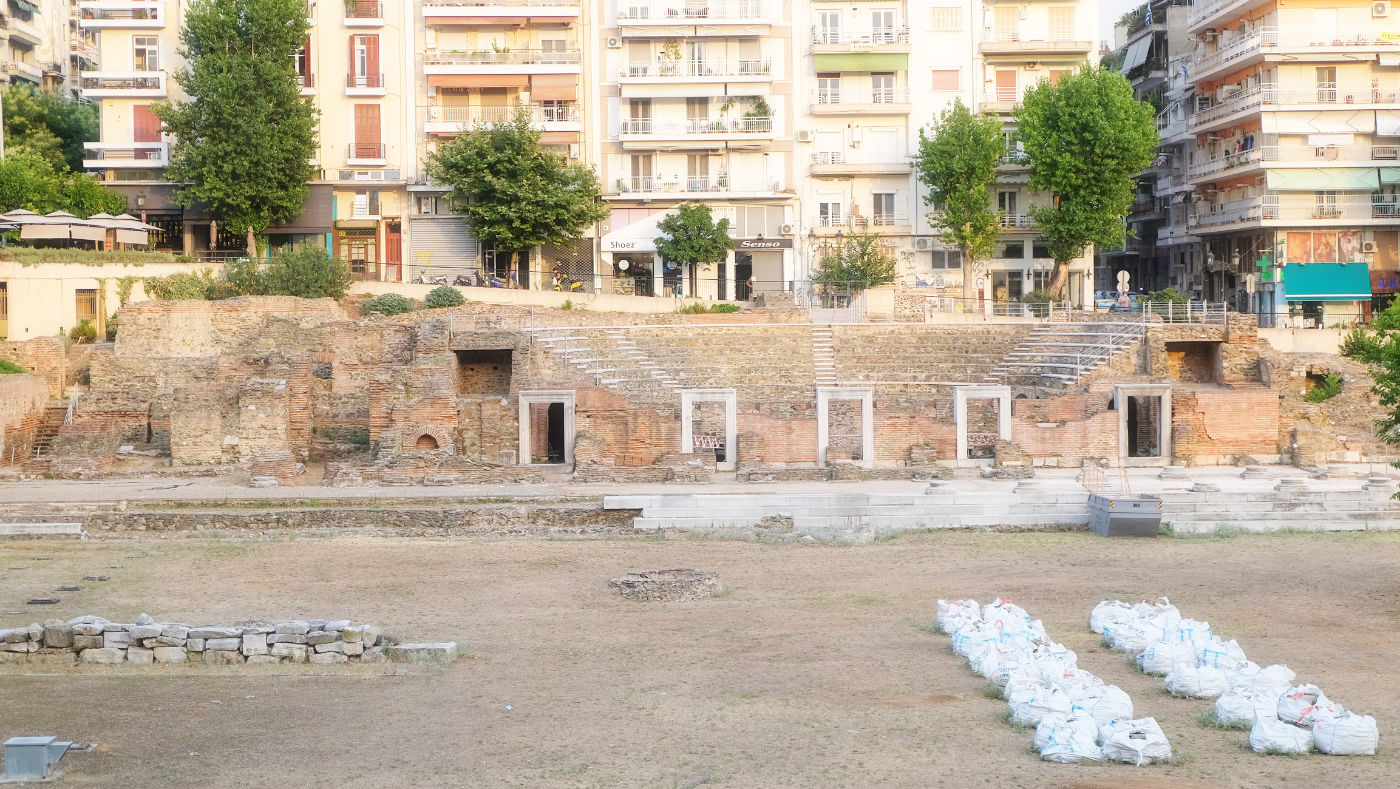
As you walk around the square today, you can still see the remains of grand two-story walkways called stoas. Back then, beautiful Corinthian columns held up the roofs. These spaces weren’t just for looks; they housed the city’s official mint and the public records office. Because of this, the roman forum in Thessaloniki acted as the administrative brain of the region.
The Odeon of the Roman Forum: from City Council to Gladiators
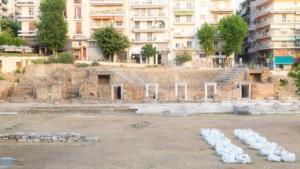
Look toward the eastern side and you’ll see the Odeon, a small theater. It started out as a place for city council meetings. However, people eventually turned it into a spot for performances and even gladiator fights. You might notice the high walls near the stage; builders added those to keep the audience safe during wild animal hunts!
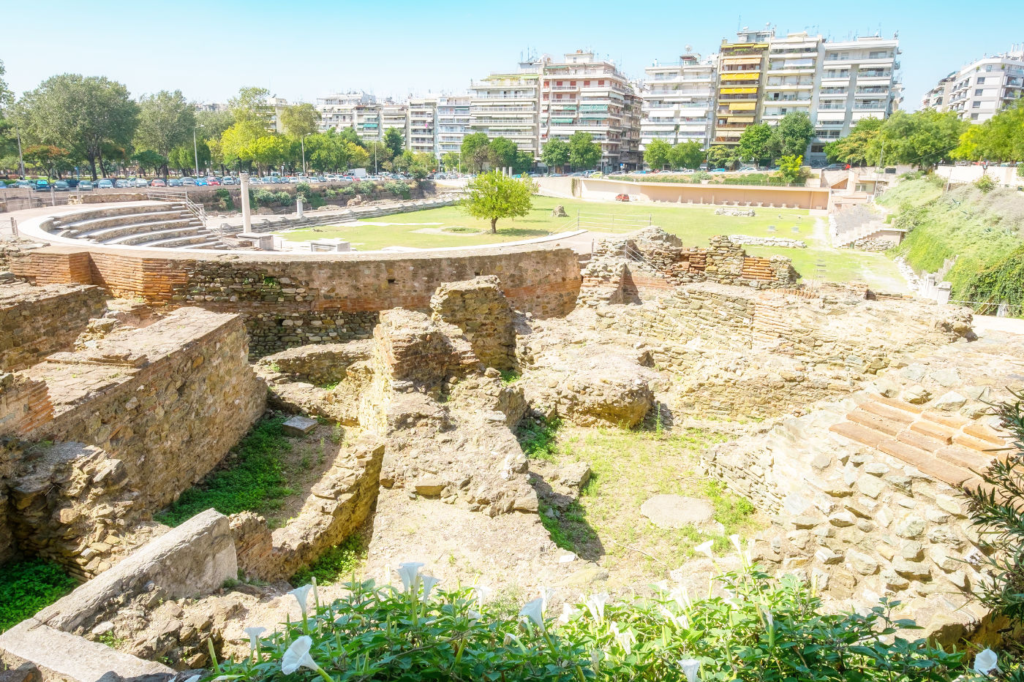
Even though nearly 2,000 years have passed, the city still uses the Odeon for concerts in the summer. There is nothing quite like hearing live music while sitting on ancient stone under the stars.
The Cryptoporticus: Exploring the Arched Underground
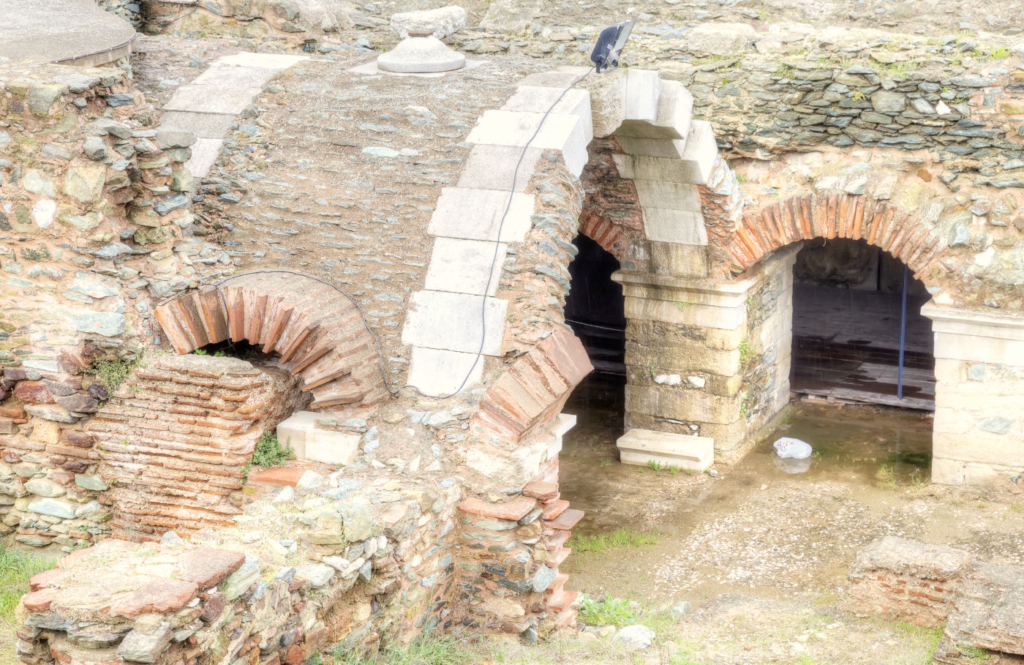
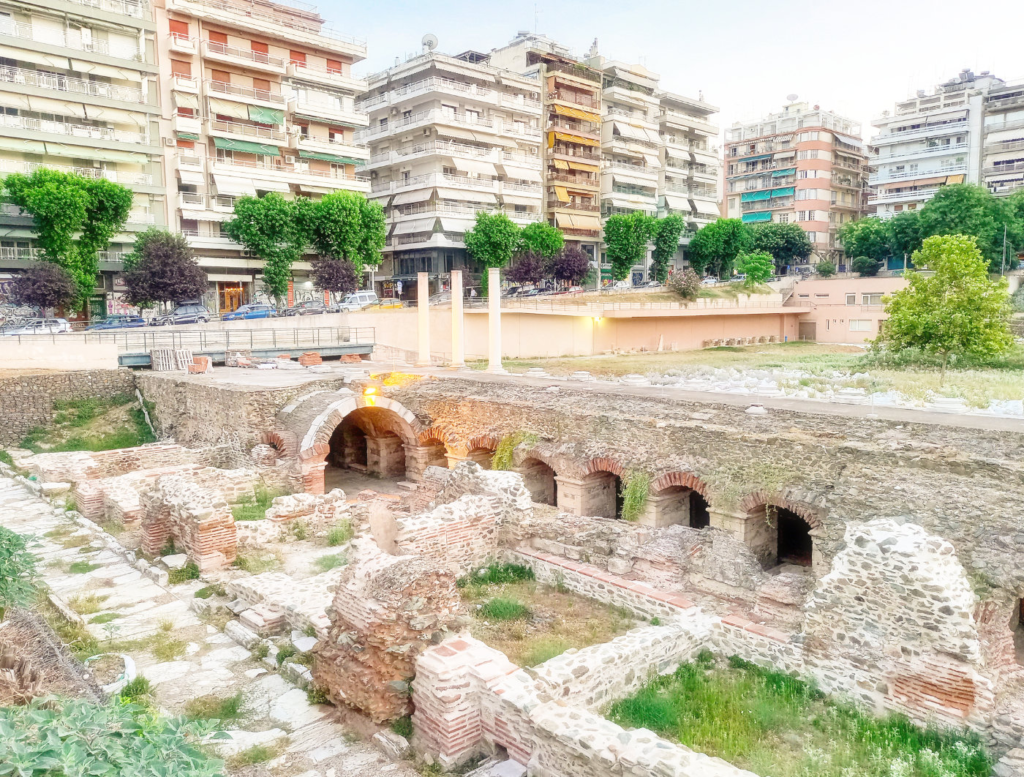
The real highlight for me is the “hidden” gallery known as the cryptoporticus. Because the city slopes downward toward the sea, Roman engineers built these huge arched underground hallways to create a flat terrace for the main square above. Walking through these cool, shady tunnels feels like stepping into a different world.
These arched passages served a few handy purposes:
Cool Storage: Merchants used the shade to keep their goods from spoiling.
Easy Walking: Pedestrians could cross the city out of the hot sun.
Underground Shops: The south side featured a row of shops facing the street.
The Ancient Agora of Thessaloniki: an Underground Treasure
Today, the Museum of the Roman Forum sits inside these very hallways. You can see jewelry, coins, and pottery that archaeologists found on-site.
The museum also explains how a big earthquake in the 6th century led to the forum’s decline. Over time, the Byzantine and Ottoman cities simply grew on top of it, hiding the roman forum Thessaloniki for centuries.
Local Legends and a Lucky Discovery
The Ancient Agora in Thessaloniki has some interesting stories. For hundreds of years, people talked about “The Enchanted Ones” ( Las Incantadas of Salonica) , a row of beautiful statues that stood near the forum. Local legends said they were humans turned to stone by a spell. Unfortunately, a French explorer hauled them off to the Louvre in 1864, so you’ll have to head to Paris to see the originals.
The forum itself almost stayed buried forever. In the 1960s, workers started digging the foundation for a new courthouse right on top of the ruins. Luckily, historians fought to stop the project and save the site. Because of their hard work, we can still stroll through these ruins today.
Here is a summary of the 10 things you can see at Thessaloniki’s Roman Forum:
1. The Odeon
Start your journey at the stunning Odeon. While it originally hosted city council meetings and musical performances, it now stands as a beautifully restored theater. If you’re lucky, you might even catch a live summer concert here under the stars!
2. The Cryptoporticus
Next, head underground into the Cryptoporticus. This double-aisled subterranean gallery feels like a hidden world. The Romans built these sturdy corridors to support the square above, but today they offer a cool, atmospheric escape from the Greek sun.
3. Ancient Agora Underground Museum
While you’re exploring the shadows of the Cryptoporticus, you’ll find the entrance to the site’s museum. This modern space sits entirely below ground level and houses a fascinating collection of coins, pottery, and marble statues discovered right beneath your feet.
4. The Grand Marble Square
Step back out into the light to admire the massive central plaza. Imagine the sound of sandals on stone as you walk across the original marble paving where ancient Greeks and Romans once gathered to gossip and trade.
5. The Ancient Mint
Keep an eye out for the foundations of the City Mint. This was the “Wall Street” of ancient Thessaloniki, where craftsmen hammered out the bronze and silver coins that fueled the empire’s economy.
6. The Row of Shops
Stroll along the edges of the Roman market of Thessaloniki to see the remains of ancient storefronts. You can easily spot the layout of these small boutiques where merchants once sold everything from fascinating spices to handmade jewelry.
7. The Roman Baths
After a long day of trading, Romans loved their spa time. You can explore the ruins of the bathhouses and see the clever engineering behind the “hypocaust” heating systems that kept the floors toasty warm.
8. Towering Corinthian Columns
Look up to appreciate the grand scale of the re-erected columns. These elegant pillars once supported the shaded walkways (stoas), and they still serve as the perfect backdrop for a travel photo today.
9. The Tabularium
Pay a visit to the City Registry, or Tabularium. This served as the city’s official “hard drive,” where administrators meticulously filed legal documents and birth records on stone and parchment.
10. The Story of “Las Incantadas”
Finally, take a moment to learn about the “Enchanted Ones.” Although the original pillars now reside in the Louvre, the Roman market of Thessaloniki tells the bittersweet story of these beautiful mythological figures that once guarded the entrance to the market.
The Neighbourhood of the Roman Forum
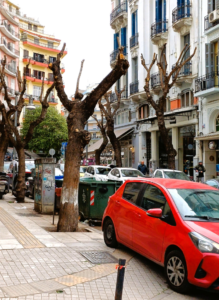
Although nestled right in the heart of Thessaloniki’s bustling city center, the Roman Market serves as a serene archaeological oasis just a stone’s throw from the iconic Aristotelous Square. It is a rare place where you can swap the hum of city traffic for the quiet whispers of history.
But the magic doesn’t stop at the ruins! The entire neighborhood surrounding the Ancient Agora in Thessaloniki is a treasure trove of hidden gems, with cozy taverns, hip cafes, and artisanal shops tucked into every nearby corner.
Most notably, the site sits right next to the legendary Olympou Street. This vibrant artery was recently crowned one of the 10 coolest streets in the world for 2025 by Time Out Magazine, ranking among the absolute best in Europe. It perfectly captures the essence of Thessaloniki: a seamless blend of traditional neighborhood charm and a fresh, creative pulse. Whether you’re looking for a trendy espresso bar, a lively local taverna, or just a front-row seat to the city’s ancient Roman heritage, this corner of the city truly has a lot to offer.
How to get to the Roman Forum of Thessaloniki
Getting there from the Twin Leaves Apartment
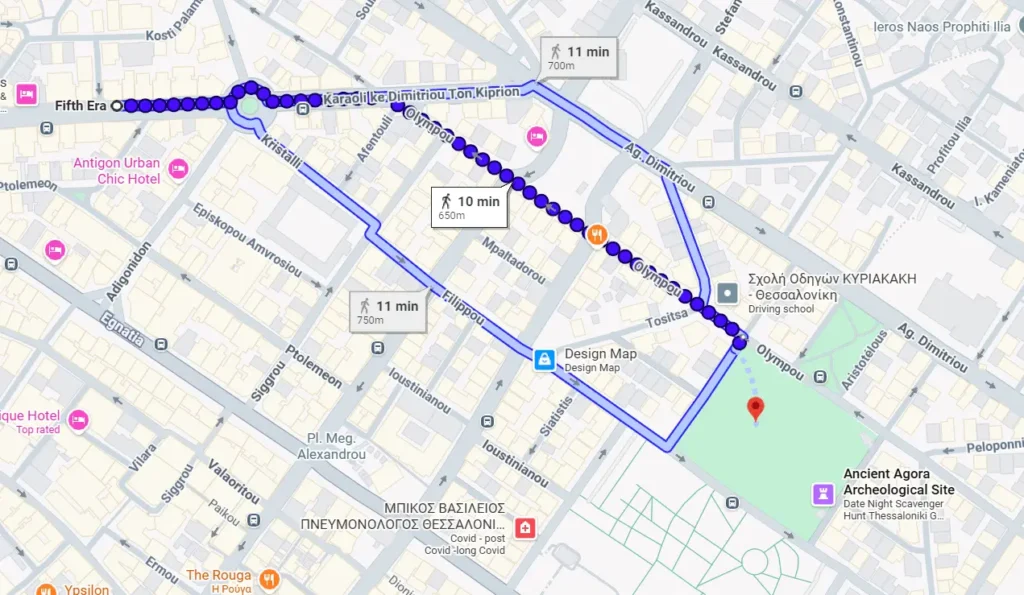
Getting to the Roman Agora/Forum is only a 10-minute walk from the doorstep of our apartment.
Getting there from the Rest of the City Center
Getting to the Roman Agora is surprisingly easy once you’re in the city center. Whether you’re hopping on the new metro or taking the classic bus route, here is exactly how to find the archaeological site.
Walking
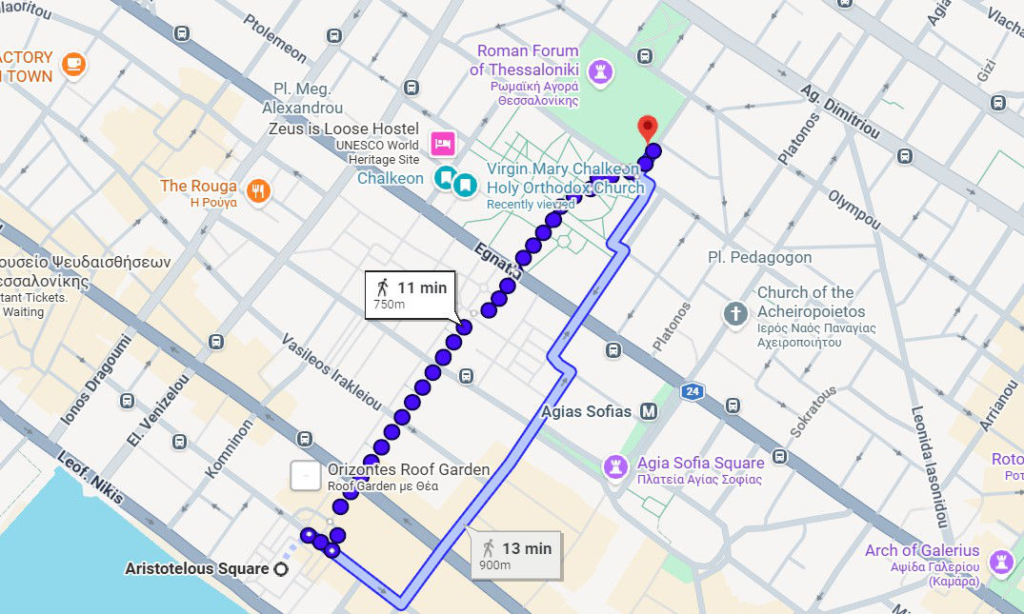
From the seaside part of Aristotelous Square, the Roman Market of Thessaloniki is about an 11-minute walk.
By Metro
Thessaloniki’s metro is the sleekest way to travel. To get to the Roman Agora, you’ll want to head to the Agia Sofia metro station (don’t forget to visit the underground metro station museums).
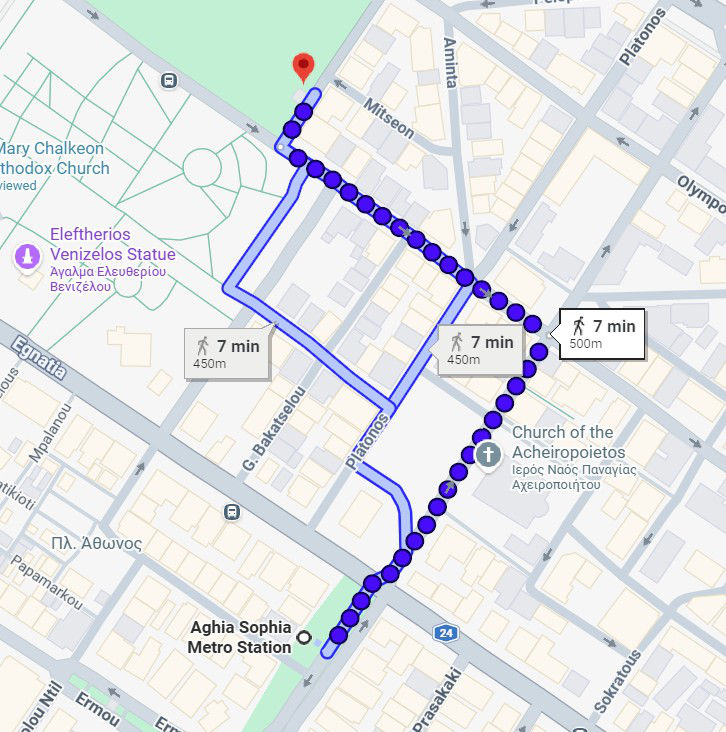
- The Station: Get off at Agia Sofia (Line 1).
- The Walk (Approx. 6–8 minutes):
- When you exit the station, head north (away from the sea) up Agias Sofias Street.
- Keep walking until you hit the junction with Filippou Street.
- Turn left onto Filippou, and within two blocks, the massive excavated site of the Roman Agora will open up on your right. You can’t miss it!
By Bus
The bus system (OASTH) is very frequent and drops you even closer than the metro.
- Which Bus to Take: Look for lines 02K, 27, 28, 31, or 33. These are the “workhorse” lines that run through the main city arteries. There are more lines, you can check
- Where to Get Off:
- Filippou Stop: This is the absolute closest stop. As soon as you step off the bus, you are practically at the edge of the ruins.
- Aristotelous Square Stop: If your bus stays on the lower main road (Egnatia Street), get off here.
- The Walk from Aristotelous Square near Egnatia Street (Approx. 5 minutes): From the bus stop on Egnatia, walk north (uphill) into a park-like walkway. Follow this straight up until you see the Roman Forum directly in front of you.
The “Cultural Line”
If you are doing a full day of sightseeing, look for Bus No. 50 (The Cultural Line). It’s a special tourist bus that loops around all the major historical sites. It has a dedicated stop right at the Roman Agora, and it’s a great way to see the city while listening to a recorded guide!
What else to Visit near the Roman Agora
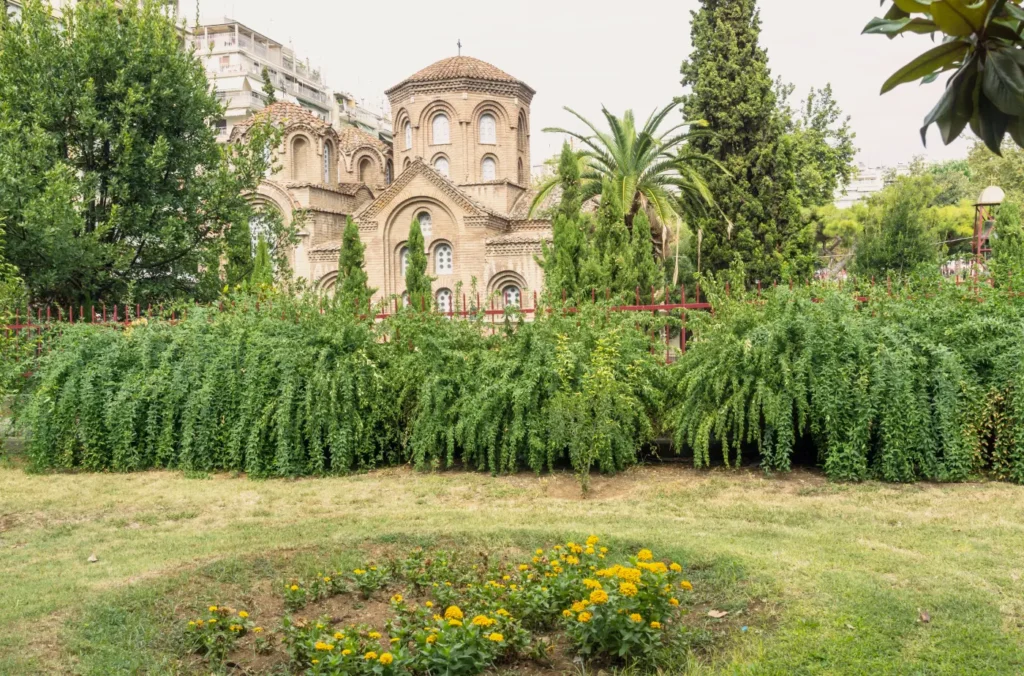
While You’re Nearby: Once you finish your stroll, walk over to the Bey Hamam (the old Ottoman baths) or the Church of Panagia Chalkeon ( a Byzantine church). Both are just a few steps away and show how the city’s layers of history blend together.