Key Takeaways
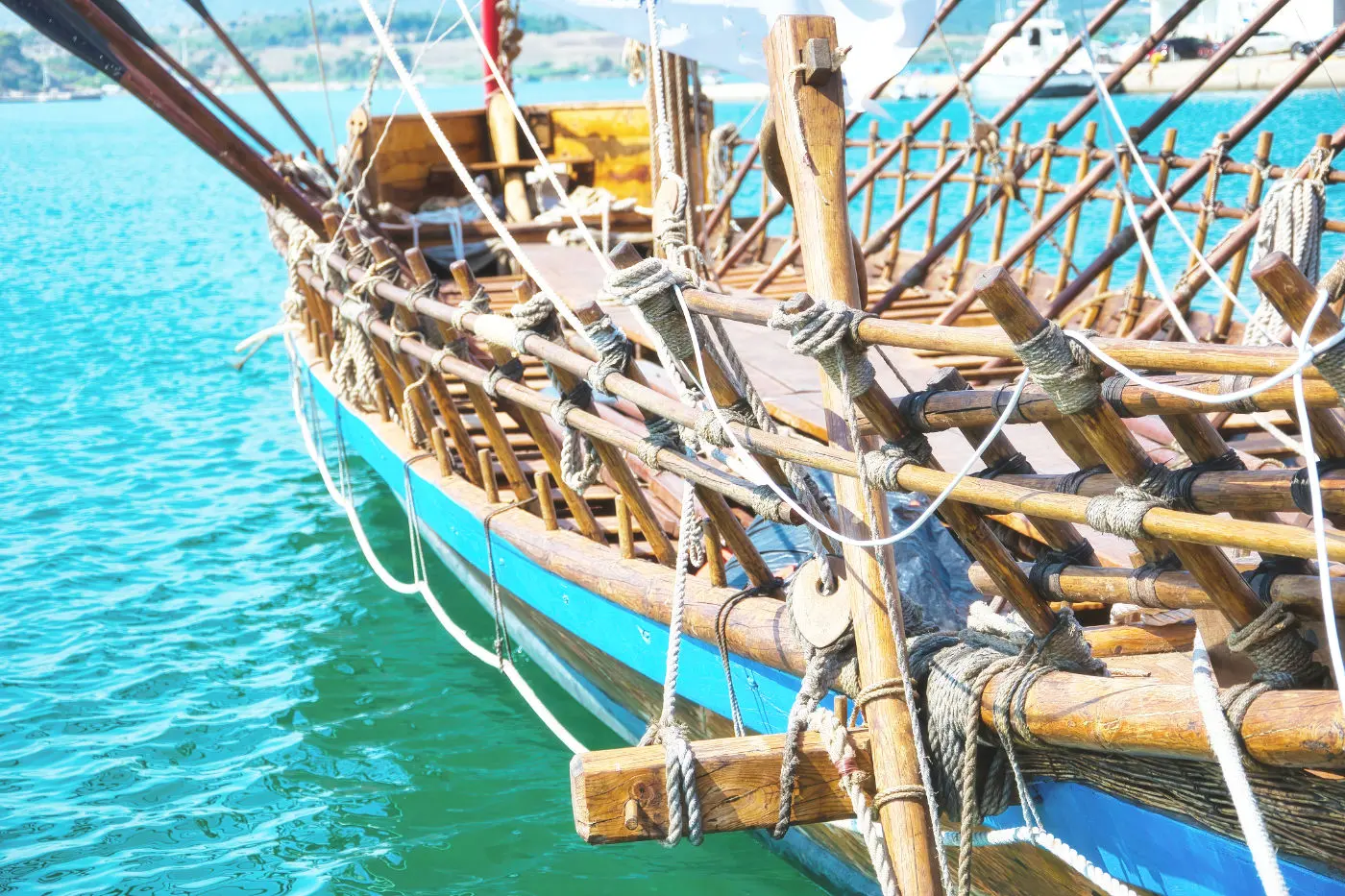
- The Argo replica ship in Volos offers a tangible link to the legendary quest of Jason and the Argonauts for the Golden Fleece.
- Historians debate the truth behind the myth, suggesting it reflects actual Greek explorations into the Black Sea.
- The replica of the Argo was constructed in 2006 to test the feasibility of Jason’s journey, demonstrating ancient engineering prowess.
- Researchers found gold artifacts linked to the Golden Fleece legend, hinting at real trade connections between Greece and Colchis.
- Volos boasts various attractions related to Jason and the Argonauts, including the Argo ship replica and archaeological sites.
Table of contents
- Key Takeaways
- The Legend of Jason and the Argonauts: Truth or Myth
- The Greek Legacy of Exploration
- Jason’s Quest for the Golden Fleece
- Is the Story of Jason and the Argonauts True?
- The Argo Replica Ship in Volos: Testing the Legend
- An Alternative Route to Italy with the Argo Replica
- The Argo Ship Finally Reaches Colchis
- The Golden Fleece Mystery: Hunting for Treasure
- Best Things To Do in Volos for Visitors of the Argo Ship
- How to get from Thessaloniki to Volos
The Legend of Jason and the Argonauts: Truth or Myth
The world-famous myth of “Jason and the Golden Fleece” is far more than just a campfire story. The tale is a legendary reflection of the daring, expansionist spirit of the ancient Greeks. Today, history comes to life in the vibrant harbor of Volos. Here, you can stand face-to-face with a breathtaking replica of the Argo. Jason and his Argonauts used the Argo to make their travels. Legend maintains that some of the ancient gods of Greece helped build the original ship. It was a marvel of ancient engineering and had a swift, fifty-oared galley featuring a magical speaking prow.
Specifically, Jason and the Argonauts braved a perilous voyage to Colchis to retrieve the shimmering Golden Fleece. The poet Apollonius of Rhodes immortalized this epic in the Argonautica during the 3rd century BCE. Visiting the Argo ship replica in Volos allows you to touch the physical legacy of one of Western literature’s oldest and greatest adventures.
The Greek Legacy of Exploration
It is no secret that the Greeks were a people driven by expansion. Their history is defined by two major waves of migration. The first occurred around 1300 BCE, when Greeks moved en masse to establish colonies across Cyprus, Crete, the western coast of Asia Minor (modern-day Turkey), and numerous surrounding islands.
The Greeks set sail once again during a second wave around 700 BCE, further colonizing Asia Minor while extending their reach to parts of Spain, Southern France, Sicily, Corsica, Sardinia, Libya, and Egypt, as well as the coastal regions of the Black Sea. This history of maritime bravery provides the perfect backdrop for the tale of Jason.
Jason’s Quest for the Golden Fleece
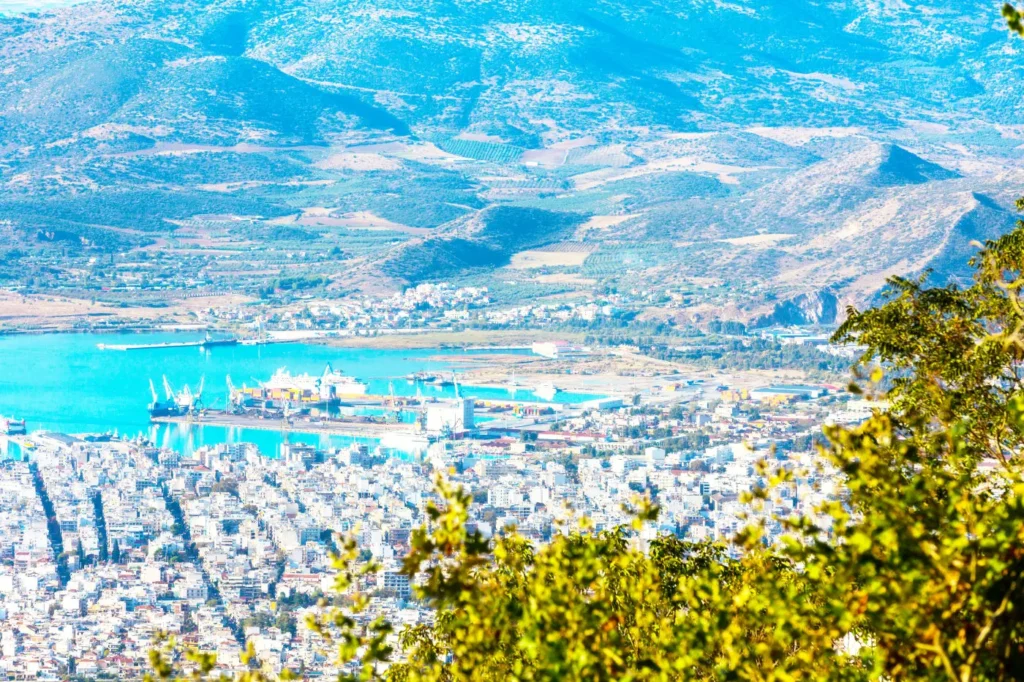
In the Argonautica, Prince Jason seeks to reclaim the throne of Iolcos (modern-day Volos) from his power-hungry uncle. To prevent this, his uncle sends him to the ends of the earth, the land of Colchis in present-day Georgia. He assigns Jason the seemingly impossible task of bringing the Golden Fleece back to Greece.
The Argo was built specifically for this mission. Fifty demigods and legendary heroes took up the oars to cross the Bosphorus and the Black Sea, encountering monsters and treacherous currents along the way. But how much of this tale is rooted in reality?
Is the Story of Jason and the Argonauts True?
For centuries, researchers have debated the extent to which this story is based on truth. Even the exact time period of the journey remains a subject of ongoing discussion.
Apollonius of Rhodes likely added demigods and supernatural figures to the crew to suit contemporary cultural tastes. However, the voyage itself may represent a metaphor for real exploration.
Scholars believe the Argonautica reflects the Greeks’ actual expansion into the Black Sea area (the Pontus) around the 8th century BCE, despite the story’s 1400 BCE setting. If true, the legend suggests that Greeks explored these territories much earlier than formal historical records currently indicate.
The Argo Replica Ship in Volos: Testing the Legend
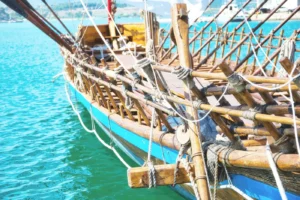
Because doubt persisted regarding the feasibility of such a journey, the city of Volos decided to bridge myth and reality. In 2004, the city commissioned an authentic reconstruction of the Argo. The vessel was completed in 2006, using traditional Bronze Age shipbuilding techniques and materials.

The team aimed to test whether a fifty-oared galley could truly navigate the 1,200 nautical miles from Volos through the Dardanelles and the notoriously difficult Bosphorus to Georgia. However, the dream hit a diplomatic wall when Turkish authorities stated they could not guarantee the crew’s safety in their waters. This statement prevented the ship from taking its intended route.
An Alternative Route to Italy with the Argo Replica
Undeterred, the replica visited 48 cities across Greece before setting sail for Italy. The crew navigated the Ionian Sea and across the Strait of Otranto to reach Venice. This voyage served as a symbolic “marathon of peace,” proving the ancient ship design was remarkably seaworthy. Following this expedition, naval experts concluded that the original Argo would have been perfectly capable of reaching Colchis as early as 1400 BCE.
The Argo Ship Finally Reaches Colchis
To ensure the spirit of the mission was fulfilled, the replica was transported by cargo ship to the port of Batumi, Georgia, in 2009. The Greek rowing crew then flew in to sail the vessel into Poti (ancient Colchis), where they received a hero’s welcome.
A farmer from Volos perhaps best illustrated the enduring power of this legend. He set out to meet the ship on his bicycle, pedaling from Greece all the way through the Black Sea coast to Georgia.
The Golden Fleece Mystery: Hunting for Treasure
Beyond the ship’s design, scientists have investigated the true purpose of the quest. Was it a mission for a throne, or a hunt for gold? Colchis boasted renowned gold deposits. Since Greece possessed very little natural gold, yet Mycenaean graves contain many golden artifacts, the Greeks must have imported the metal.
Scientific Evidence in the Tombs of Volos
Researchers from the Louvre in Paris, London, and Germany have spent years analyzing gold from the tombs of Volos. Despite delays caused by regional conflicts, a recent study of 165 artifacts from the Dimini and Kazanaki burial sites has provided clarity.
Workers crafted the jewelry from “river gold” found in sediment. This aligns perfectly with the “Golden Fleece” legend: ancient inhabitants of Colchis used sheepskins to trap fine gold particles in rushing river currents.
A Connection Found between Volos (Greece) and Colchis (Georgia)
While local workshops near Volos likely crafted the jewelry, the raw material and extraction techniques point directly to a trade network with the Black Sea. The discovery of two massive Mycenaean palaces near Volos further bolsters the theory that these kingdoms dispatched expeditions for precious resources. In this light, the Golden Fleece becomes a powerful symbol for the real-world quest for wealth in distant, unexplored lands.
Best Things To Do in Volos for Visitors of the Argo Ship
Things to See in Volos Related to the Myth of “Jason and the Argonauts”:
- The Argo Ship Replica, Volos: Visit the full-scale, functional reconstruction in the Volos harbor. Check with the Information Centre for its current mooring.
- Argonauts Avenue (Paralia): Stroll the waterfront to see the striking bronze monument of Jason and the Argo.
- Athanasakeio Archaeological Museum: Explore artifacts from the “Heroic Age” associated with the era of Jason and the Argonauts.
- Archaeological Site of Dimini: Visit this Mycenaean settlement, believed by many to be the real-life location of ancient Iolcos.
- Anavros River: See the spot where Jason is said to have lost his sandal while helping the goddess Hera.
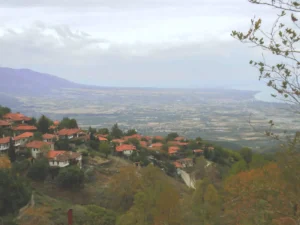
- Centaur’s Trail: Hike Mount Pelion, the mythological home of Chiron, the centaur who educated Jason.
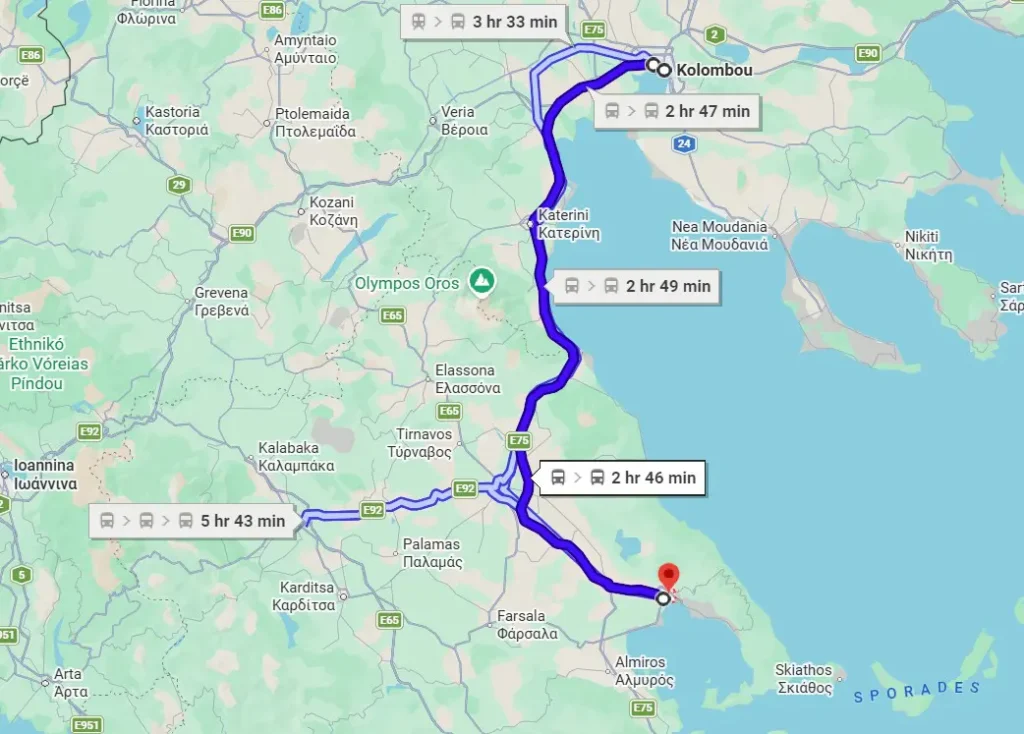
How to get from Thessaloniki to Volos
Reaching Volos from the heart of Thessaloniki is straightforward and takes about three hours by bus. Start by catching a local connection on Egnatia Street out to the main Thessaloniki KTEL Intercity Bus Station. From there, you can easily hop on the direct intercity coach straight to the Volos KTEL Station.