Key Takeaways
- In winter, Thessaloniki street food features roasted chestnuts from local vendors, especially on Tsimiski Street and Aristotelous Square.
- The tradition of kastanas links to the region of Pieria, known for its quality chestnuts from Mount Olympus.
- Greek chestnuts originated in Ancient Paphlagonia, becoming a significant trade commodity in history.
- Over centuries, the chestnut evolved from a luxury good to a staple for the working class, celebrated in modern Greek culture.
- Experience winter chestnut festivals in villages like Paleos Panteleimonas and Livadi – Thermi for a taste of this rich culinary heritage.
Table of contents
- Key Takeaways
- Authentic Greek street food in winter
- From Mt Olympus to street food of Thessaloniki
- Ancient Paphlagonia: The Birthplace of the Greek Chestnut
- The “Nut of Zeus” and the Elite Delicacy
- From Royal Tables to “working-class staple” to thessaloniki street food
- The Life Cycle of the Castanea Sativa
- A Family Affair: The Harvest in Pieria
- Winter Festivals: Celebrating the Harvest
- A Legacy Spread by Empires
- Wintry Thessaloniki Street Food – Why You Must Try The Chestnut
Authentic Greek street food in winter
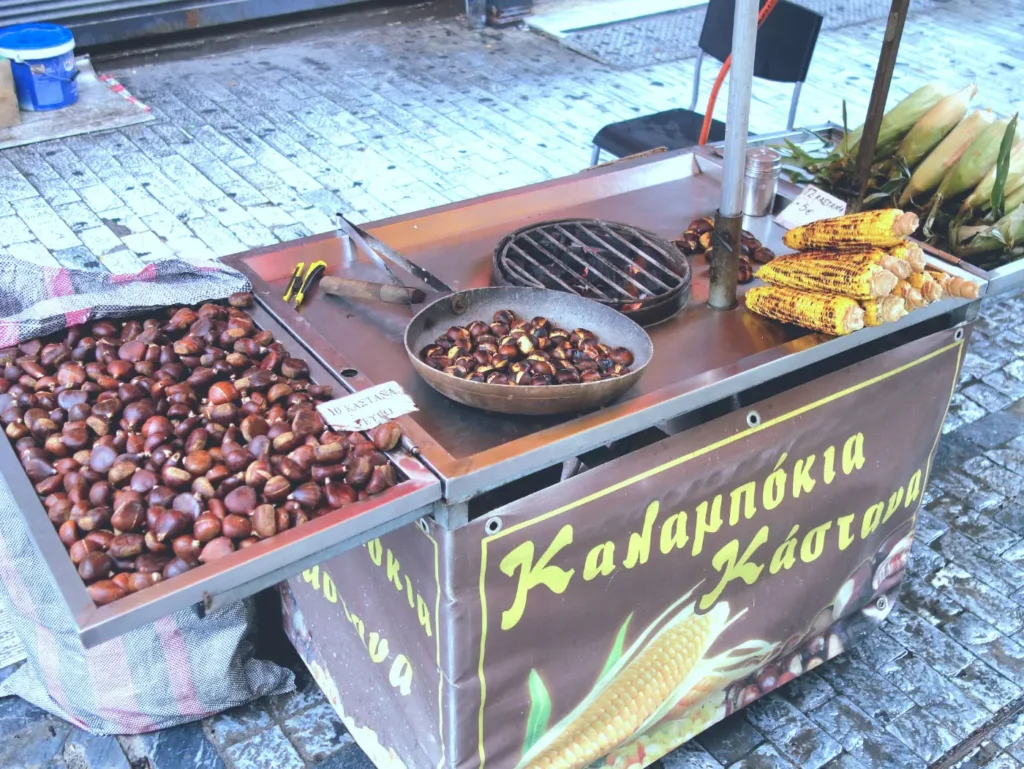
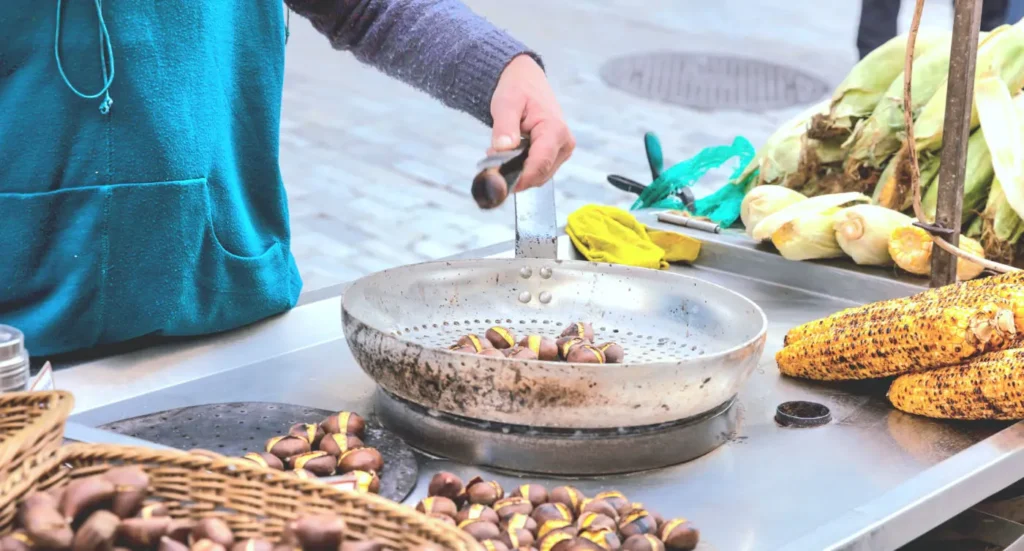
As the autumn air turns crisp in Greece, a beloved tradition returns to the city streets. The kastanas (chestnut vendor) makes his grand entrance. He descends from the peaks of Mount Olympus with sacks of freshly harvested sweet chestnuts. Stationed at busy corners, these vendors roast their bounty over glowing coals, filling the urban air with a warm, smoky aroma that defines the season. He prepares the wintry Thessaloniki street food Greeks are so fond of: the roasted chestnuts.
As Greece’s second-largest city and undisputed culinary heart, Thessaloniki takes its seasonal snacks seriously. While many visitors hunt for gyros, the roasted chestnut remains the most authentic and healthy vegan street food of Thessaloniki in winter.
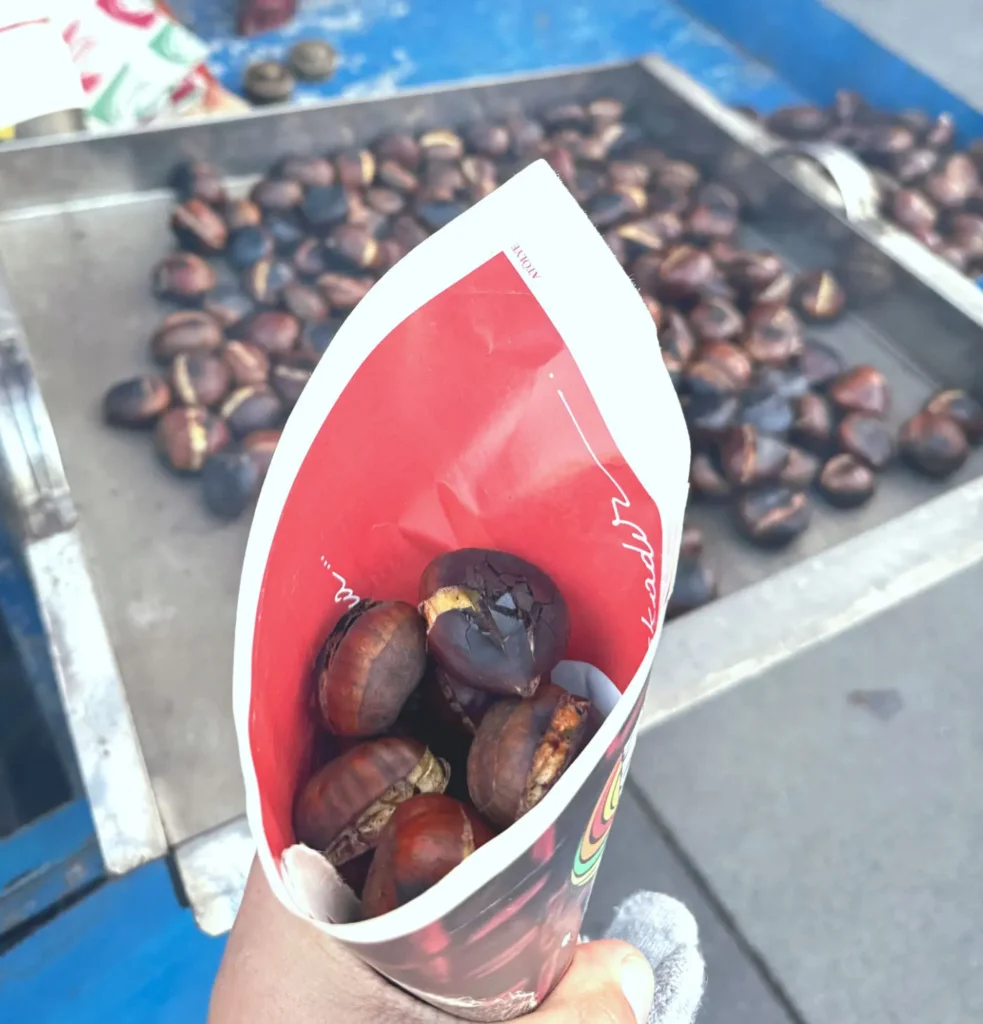
When you visit in December, do not simply walk past the smoke. Your mission is to find a vendor on Tsimiski Street or Aristotelous Square. Ask him about his foufou, and buy a cone of Pierian chestnuts. It is, without a doubt, the cheapest and most soulful souvenir you will ever find.
From Mt Olympus to street food of Thessaloniki
The tradition of the kastanas holds a sacred place in the hearts of the people in the Greek district of Pieria. Since this region sits at the foot of Mount Olympus, an area famous for its dense, ancient forests, the quality of the produce here is unmatched. In fact, Pieria serves as the primary “source” for the nuts sold in cities across the country.


In the past, the kastanas would begin his preparations as soon as the first autumn rains hit the soil. He would travel on his donkey down the mountain trails, carrying his foufou, a round, portable charcoal brazier made of zinc. Today, the donkey has been replaced by the car, but the ritual remains unchanged.
The vendor sits on a low stool, notches each nut with a sharp knife to prevent it from bursting, and watches the coals smolder. With fire tongs in hand, he waits for the shells to rupture before placing the steaming treats into a paper cone.
Ancient Paphlagonia: The Birthplace of the Greek Chestnut
Greek myths claim the chestnut tree sprang from the body of the beautiful nymph Neas. History offers a more grounded origin. The true cradle of the chestnut is Ancient Paphlagonia. This rugged region along the southern coast of the Black Sea was home to Greek settlers for centuries before the Christian era.
Although humans have eaten wild chestnuts since the Bronze Age, the Greeks of Paphlagonia were the first to turn them into a major trade commodity. They distributed the “Paphlagonian nut” throughout Asia Minor and the Greek mainland. Interestingly, the famous Greek botanist Theophrastus (372–287 BC) confirmed that the slopes of Mount Olympus in the Pieria district were already covered with sweet chestnut trees during his time.
However, despite living alongside these vast forests, the local inhabitants of the Greek mainland didn’t actually know how to utilize them. It was only when the Greeks of Paphlagonia began trading and distributing the nuts that the people of Pieria finally realized the culinary and commercial value of the fruit growing in their own backyard. These settlers from the Black Sea essentially “taught” the mainland Greeks what to do with the bounty of Mount Olympus. This ancient knowledge exchange laid the groundwork for the culture we see today. It is the very reason you can enjoy this delicious street food in Thessaloniki every winter.”

The “Nut of Zeus” and the Elite Delicacy
Ancient literature confirms the high status of the chestnut. Before it was known as the kastano, the poet Hermippos referred to it as the “Nut of Zeus” in his 440 BC poem Phormophoroi. He hailed Athens for its powerful navy, which allowed the city to import luxury goods from every corner of the known world. About the chestnut, he wrote: “The nuts of Zeus… provided by the people from Paphlagonia, form the crown to every dinner.”
At the time, the sweet chestnut was a delicacy reserved for the elite. The Greeks made medicinal honey from it and attributed numerous therapeutic properties to the fruit. Even legendary figures like Homer, Xenophon, and Hippocrates mentioned the nut in their works, cementing its status as a “food of the gods.”
From Royal Tables to “working-class staple” to thessaloniki street food
The chestnut’s transition from an elite treat to a common staple occurred as populations exploded across Europe. Because the chestnut tree grows rapidly and thrives where cereals fail, people began planting it everywhere. Consequently, the chestnut became the “food number one” for the working class.
Unfortunately, this mass production eventually hurt the nut’s quality and eventually its reputation. By the end of the Middle Ages, people associated chestnuts with indigestion and headaches. Luckily, modern science and traditional Greek roasting methods have restored its sound reputation. Today, it stands as the ultimate “clean” snack, free from the heavy fats often found in other urban bites.
The Life Cycle of the Castanea Sativa
Sweet chestnut trees in Greece thrive at altitudes between 400 and 1,000 meters. Some stand as solitary giants, while others form vast, interlocking woods. These trees can reach heights of 35 meters, sending their roots deep into the earth to withstand the mountain winds.
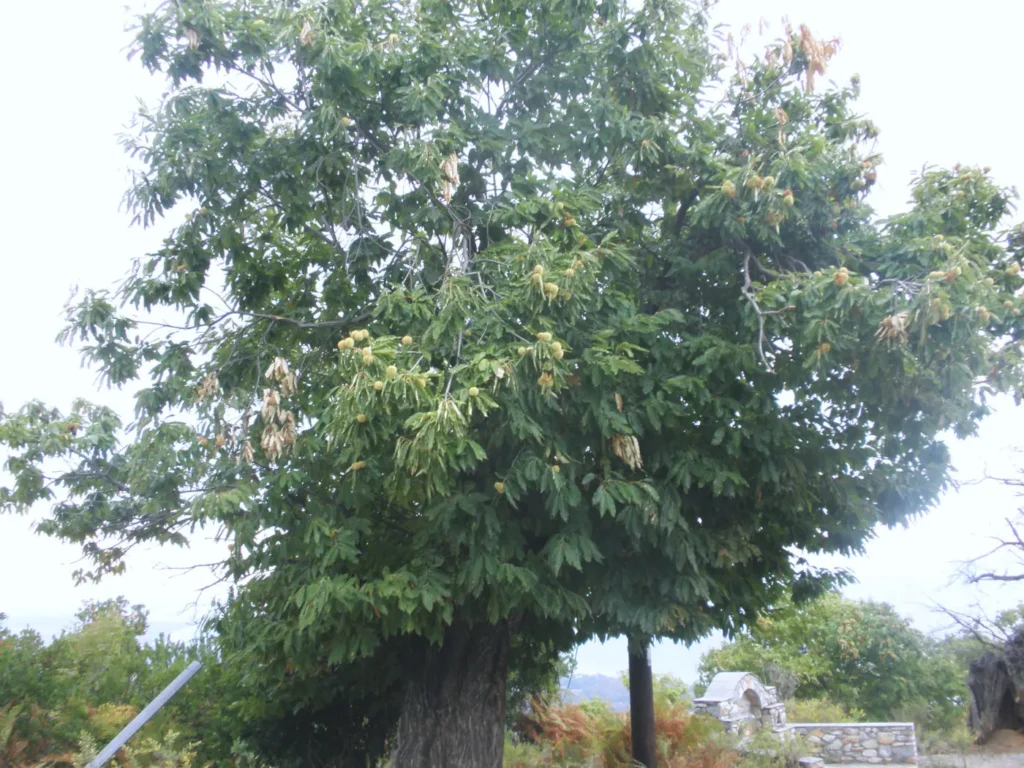
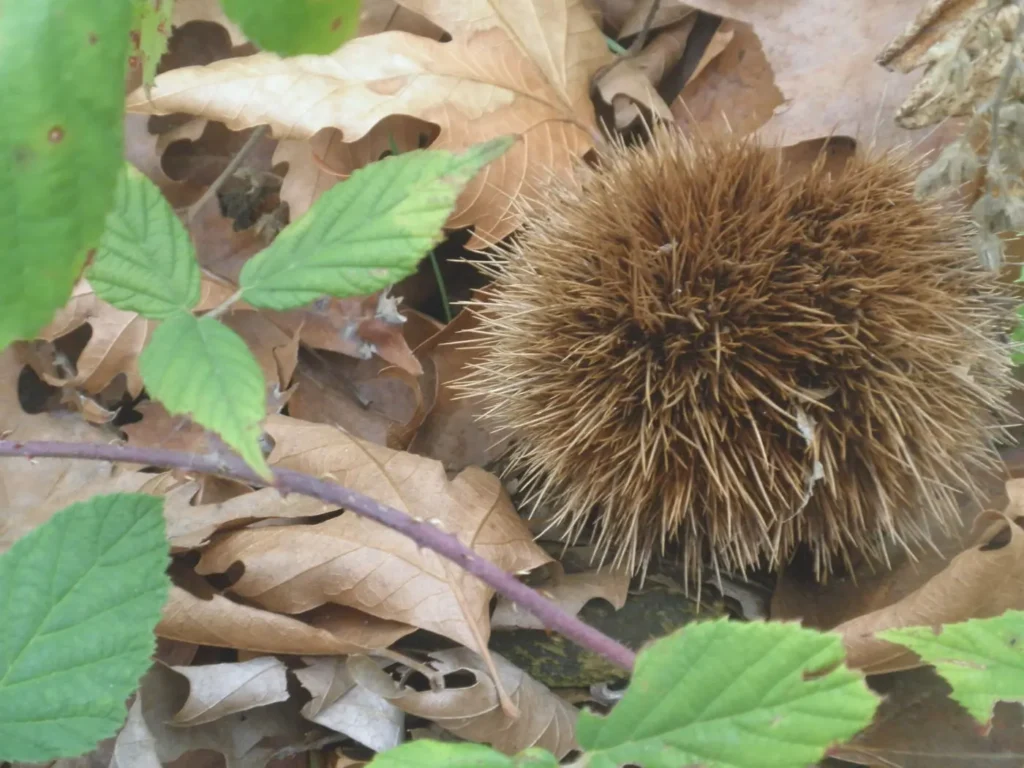
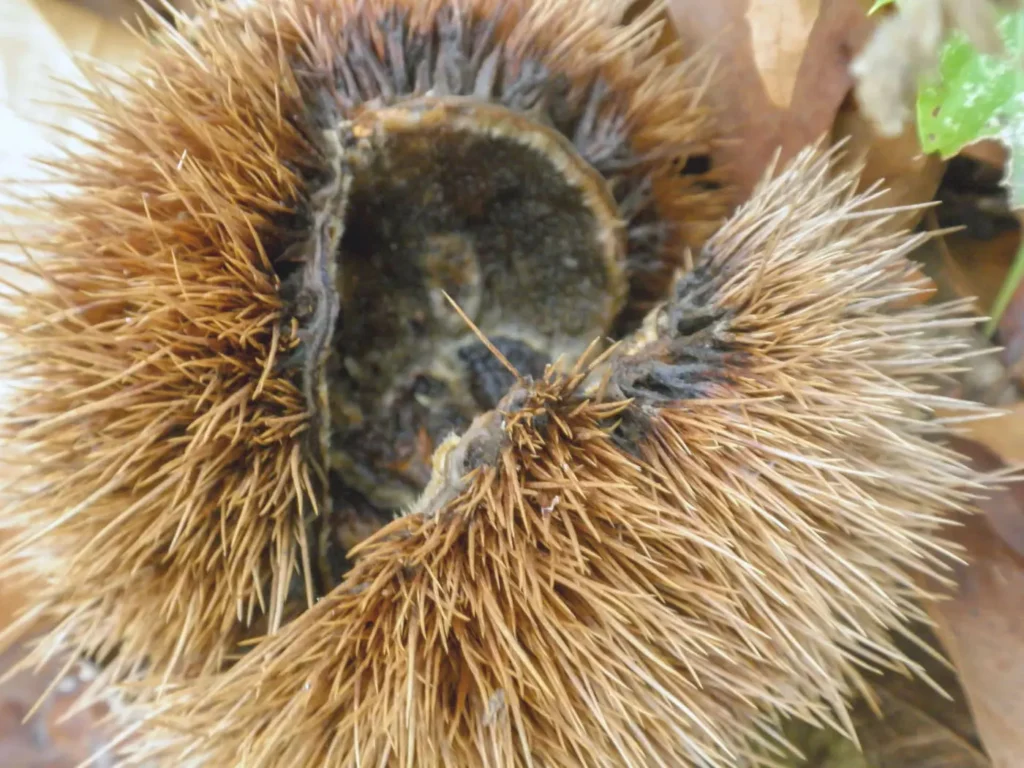
Nature has a clever way of spreading these trees. Rainwater often carries chestnuts down streams to new soil, and forgetful squirrels frequently “plant” new groves by hiding nuts in the earth. Each prickly husk, or “burr,” contains one to three chestnuts. When they ripen, the husks tear themselves open, signaling the start of a grueling harvest.
A Family Affair: The Harvest in Pieria
Collecting chestnuts is a monumental task that involves entire families. Armed with buckets and thick gloves to protect against the prickly husks, workers spend up to twenty days in the plantations. This labor-intensive process is why the locals in Pieria take such pride in their harvest. Every chestnut sold on a Thessaloniki street corner represents a family’s hard work in the mountain air.
Winter Festivals: Celebrating the Harvest
If you want to experience the winter chestnut tradition beyond the city limits, you must visit a Chestnut Festival. During the cold months, mountain villages across Greece host these celebrations, offering roasted and boiled chestnuts alongside traditional music, wine and local tsipouro.
Chestnut festival on Mount Olympus
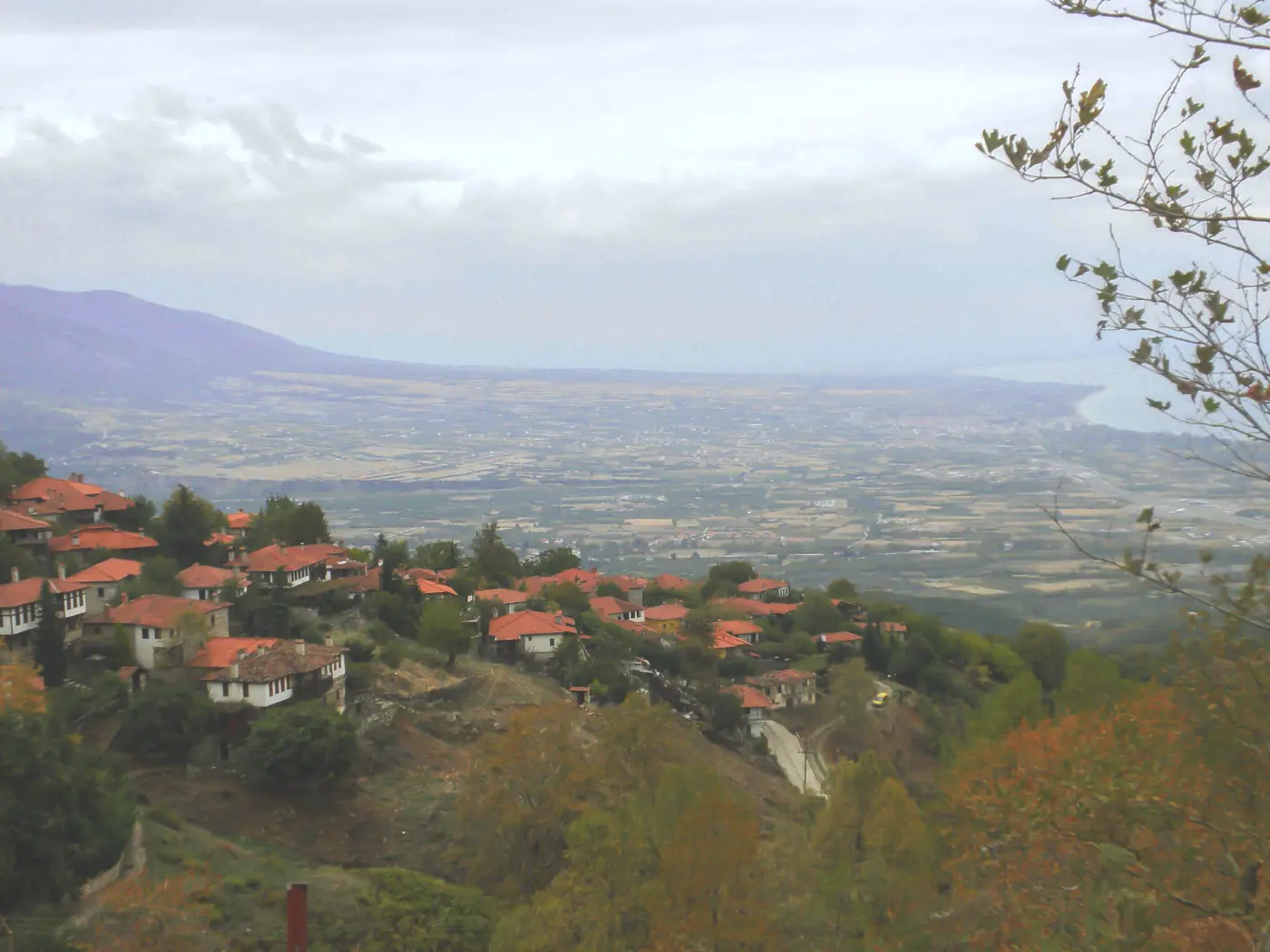
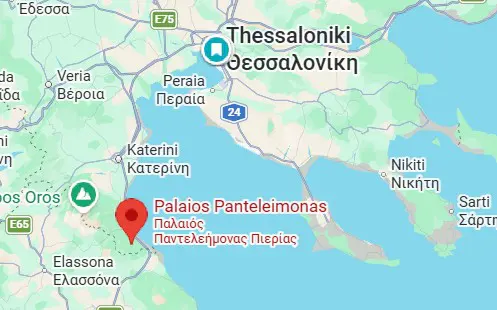
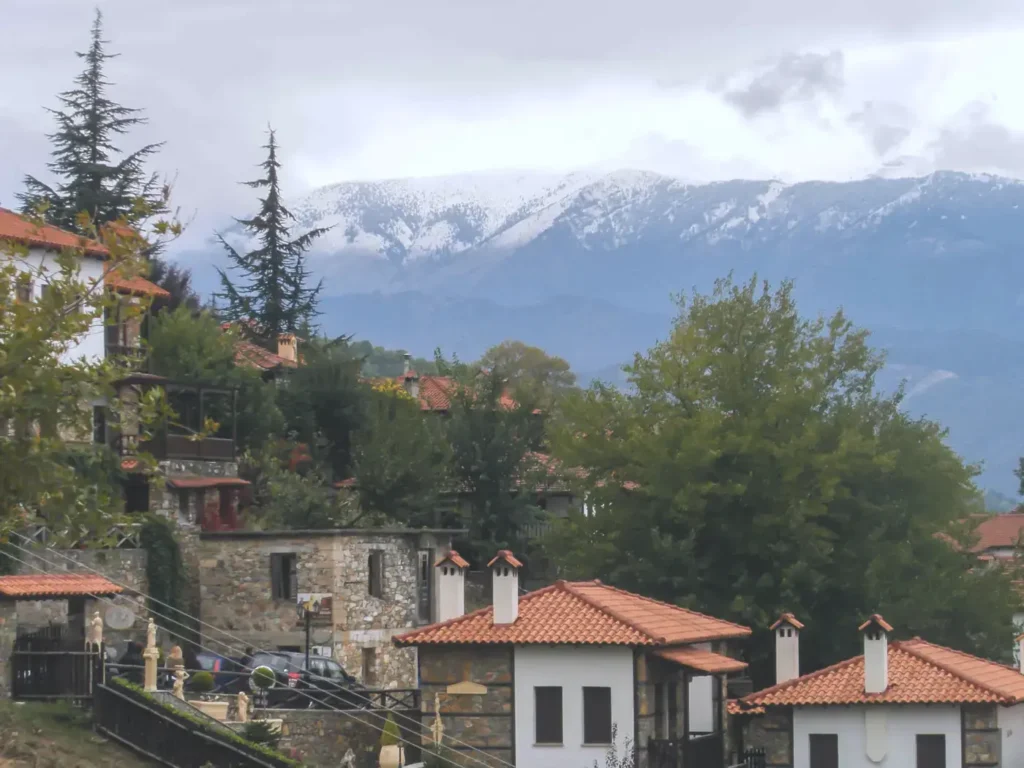
One of the most breathtaking festivals has traditionally taken place in Paleos Panteleimonas. This charming mountain village on Mount Olympus is literally surrounded by chestnut trees and their yearly chestnut festival drew visitors from across the region to celebrate the harvest. However, as of 2026, current information regarding its annual schedule is unavailable. Travelers should check with local authorities in the Pieria district to see if this local tradition is still occurring as it once did.
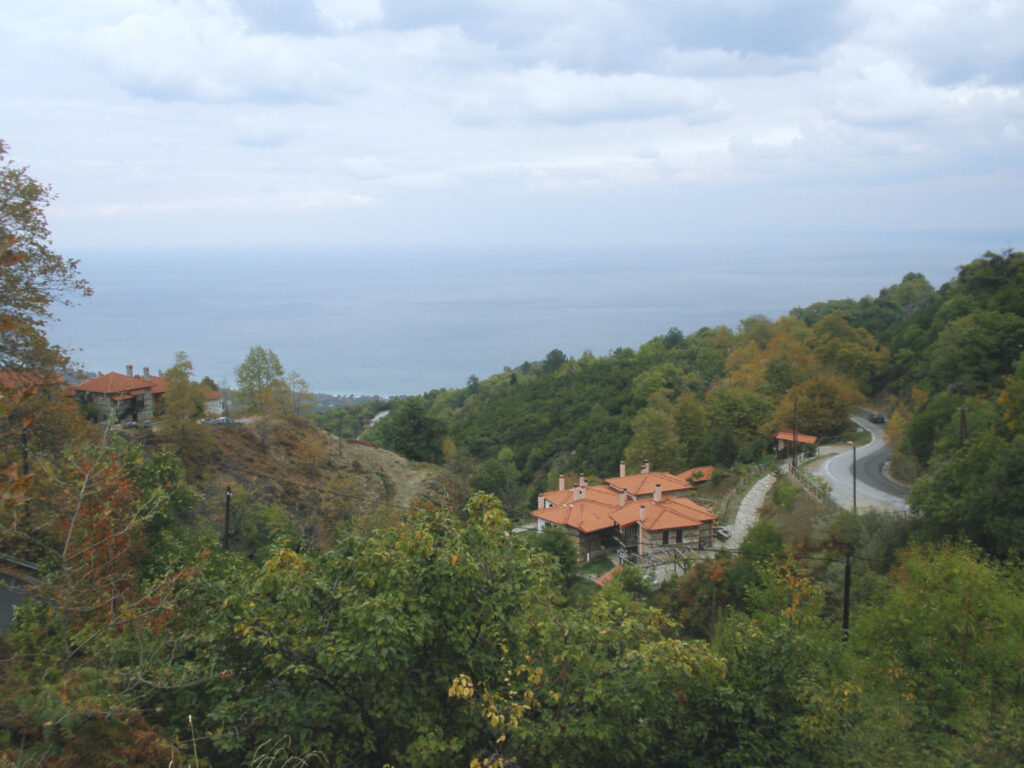
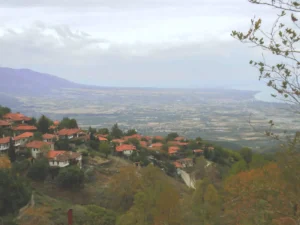
Nevertheless, this stone-built village is a pleasure all year round. The autumn and winter atmosphere feels completely different from the summer buzz. Since Paleos Panteleimonas is only an one -hour-and 20 minutes drive from Thessaloniki, it is a perfect day trip from Thessaloniki.
The journey to this village is a sensory delight. As you wind up the mountain road, you can admire the snowy peaks of Olympus towering above. You will see the vast, fertile plains of Pieria stretching below, and the sparkling coastline of the Aegean Sea in the distance.
In autumn, this road becomes a vibrant tapestry of color. Beautiful beech and “sparkling” green chestnut trees line the path. Hundreds of husks cover the ground. Nearby, the red and orange fruits of the koumoura (strawberry tree) add a cheerful touch. The landscape beautifully transitions into winter.
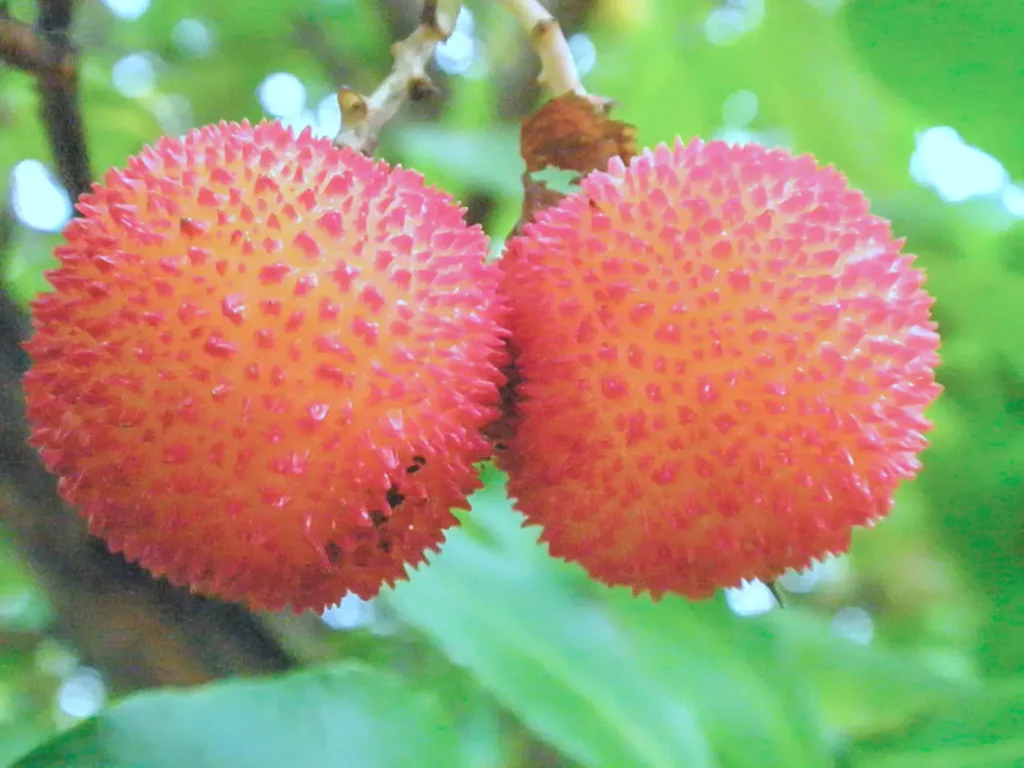
This scenic drive offers more than beautiful views. It provides a firsthand look at the heart of the harvest. You will see exactly where the chestnuts grow before they reach the city streets. The iconic street food Thessaloniki enjoys all winter starts its journey right here in the mountain groves.
yearly chestnut festival in Livadi – Thermi
Visiting the chestnut festival of Livadi in the municipality of Thermi is the closest option if you stay in Thessaloniki. It’s just about 40 minutes from the center. Ιt takes place every year in late October or early November.
The village is surrounded by a beautiful chestnut forest with marked trails for lovers of hiking.
You can stay updated about the festival on the website of the municipality of Thermi (translate the content to english in the browser).
A Legacy Spread by Empires
The chestnut’s journey didn’t stop in Greece. The armies of Alexander the Great and, later, the Roman Legions recognized the value of this “portable” nutrition. They planted sweet chestnut trees across Europe as they marched, ensuring their troops had a reliable food source.
This military expansion turned the chestnut into a global phenomenon. However, the soul of the tradition remains firmly rooted in the Greek mountains. When you taste this street food in Thessaloniki, you are participating in a culinary legacy. The legacy that spans from the ancient Greeks of Paphlagonia to the Roman generals, and finally to the humble kastanas who keeps the fire burning in the heart of the city.
Wintry Thessaloniki Street Food – Why You Must Try The Chestnut
The next time you find yourself wandering through a misty Greek plaza in winter, follow the scent of the smoke. The winter chestnut tradition is a reminder of Greece’s resilience and its deep connection to the land. From the elite tables of ancient Greece to the modern paper cones of Thessaloniki, the chestnut has remained a constant companion.