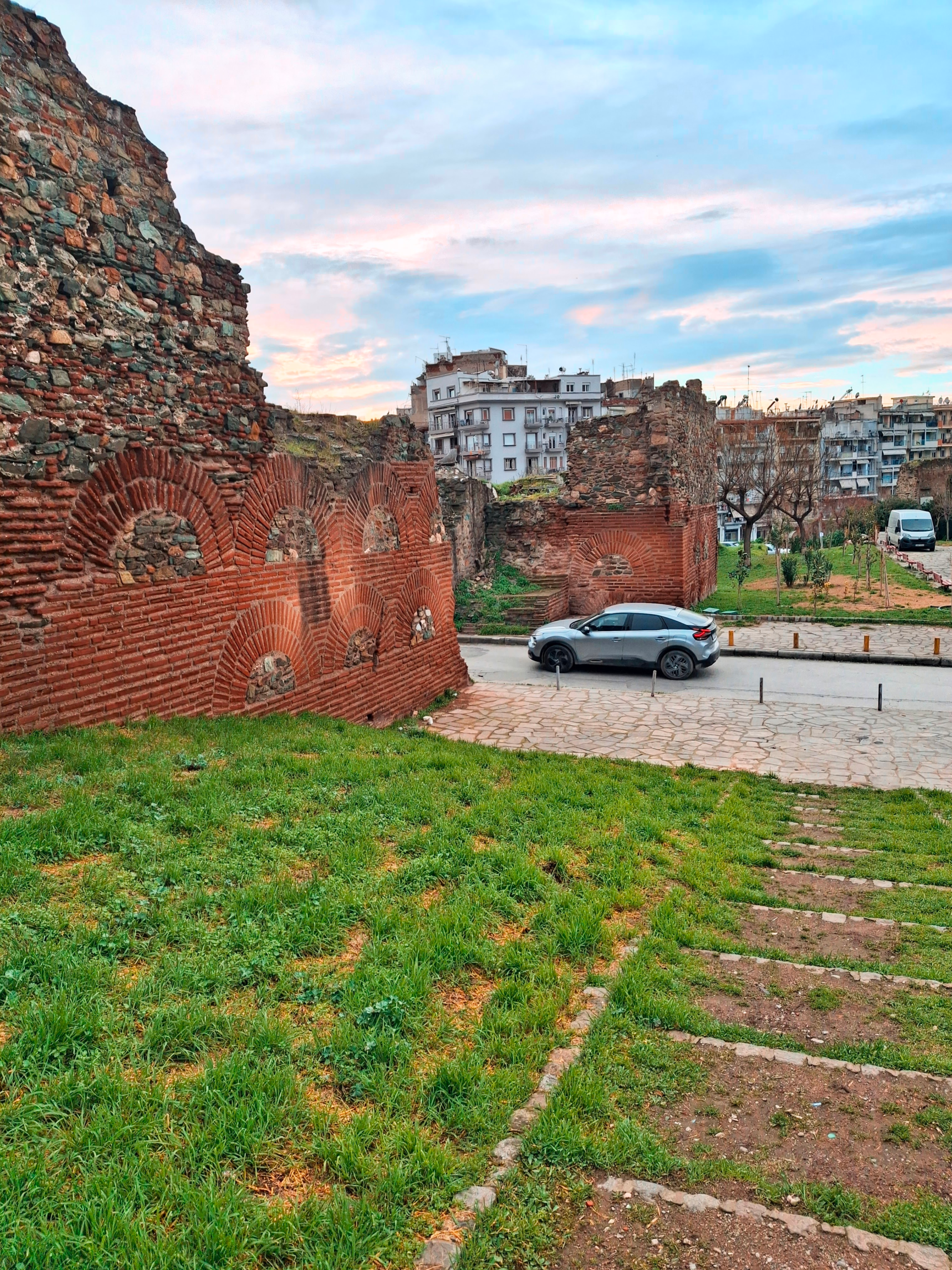
The Gates of Upper Town and Down Town Thessaloniki
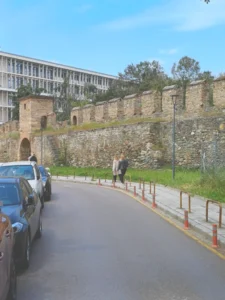
Thessaloniki is a city where you don’t just visit history, you walk right through it. If you love exploring on foot, you’ve likely noticed the massive Byzantine walls and its towers snaking through the modern skyline. Locally known as the kastra (castles), these fortifications once stretched nearly eight kilometers around the city.
While much of the lowland wall and gates were demolished during 19th-century urban expansion, the “magic” remains in the Gates of the Upper Town (Ano Poli).
The gates of Thessaloniki weren’t just doors, they were the heartbeat of the Roman, Byzantine and Ottoman Empires, connecting the legendary Via Egnatia to the rest of the world.
The Gates You Can Still Visit Today
Most of the surviving gates are tucked away in the imposing city walls of charming Ano Poli (Upper Town). This area is a dream for travelers who love steep, narrow alleys, UNESCO Byzantine monuments, traditional Ottoman and Macedonian architecture, and a solid post-walk meal in a cozy taverna.
1. Portara (The Main Gate)
Located at the highest point of the city, Portara is the superstar of Thessaloniki’s gates. It was the primary entrance from the city into the Acropolis. Standing here, you can almost hear the echoes of Byzantine soldiers.
Pro Tip: This is the best spot for sunset photos of the Thermaic Gulf!
2. Gate of Anna Palaiologina
Built in 1355, this gate is a rare piece of late Byzantine history. It features a marble inscription naming the Empress Anna Palaiologina herself. It leads toward the exterior of the walls where the city meets the Sheikh Sou forest and the neighborhood of Sykies. It’s located near the iconic Trigonion Tower.
3. The Heptapyrgion (Yedi Kule) Gates
Inside the Heptapyrgion Fortress, (which is a UNESCO World Heritage Site) you’ll find smaller, heavy gates that once connected the high-security citadel to the open countryside. Today, the area is wonderfully quiet, offering a haunting glimpse into the city’s darker history as a notorious prison.
4. Letaia Gate or Lete Gate (The Remnants)
Located at the western end of Agiou Dimitriou Street, only small remnants remain today. However, it holds massive historical weight: tradition says the Apostle Paul entered the city through this very gate during his missionary journey.
The “Lost” Gates: Where Modernity Met Antiquity
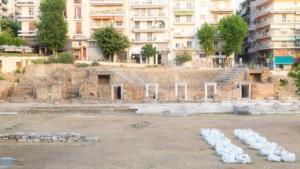
In the late 19th century, the Ottoman rulers decided to “modernize” the center of Thessaloniki. Sadly, this meant many of the grand lowland gates were demolished. While they are gone, their locations still define the city’s layout.
The Gates of the old center in downtown Thessaloniki
| Gate Name | Location Today | Fun Fact |
| Golden Gate (Vardar) | Vardaris Square/ Dimokratias Square | The grand western entrance and the end of the Via Egnatia. |
| Kassandrian Gate | Syntrivani Square | The eastern bookend to the city’s main street. |
| Gate of Rome | Near the White Tower | The main entrance for those arriving from the coast. |
| Gialos Gate | Modern Port area | The bustling “Coastal Gate” for sailors and traders. |
Hidden Details to Look For
When you find a gate, don’t just walk through it, look at the stones!
- Spolia (Upcycled History): The Byzantines were the original recyclers. You’ll see “spolia”—pieces of Roman marble benches and older buildings—tucked into the brickwork of the gates.
- Defensive Design: Notice how the gates aren’t just holes in the wall. They were often flanked by massive square or triangular towers, designed to trap invaders in a “kill zone.”
Walking tour: Beyond the White Tower
This walking tour takes you from the modern seafront and the White Tower, up through the winding, atmospheric streets of the Upper Town (Ano Poli), following the path of the city’s mighty Byzantine fortifications and their historic gates.
Exploring Thessaloniki’s Hidden Byzantine Gates & Upper Town
Morning: Imperial Grandeur & The Lower Walls
Start your journey at Thessaloniki’s most iconic landmark to orient yourself with the coastal defenses.
White Tower of Thessaloniki
This Ottoman-era tower stands where the eastern wall met the sea. While the nearby Gate of Rome is long gone, the tower remains the best place to visualize the city’s ancient boundaries.
* Features an interactive museum detailing the city’s history.
* Offers a 360-degree view of the Thermaic Gulf from the top.
Arch of Galerius and Rotonda
Walk north through the Navarinou pedestrian area. You are now walking near the site of the Asomati Gate. These Roman monuments were part of an imperial precinct that connected directly to the city walls.
* The Arch features intricate marble reliefs celebrating Roman victories.
The Rotonda
Is one of the oldest religious sites in the world one of the 15 UNESCO monuments in Thessaloniki, it has served as a temple, church, and mosque during the rule of the different empires.
Afternoon: The Ascent to the Byzantine Gates
From the Rotonda, begin your steady climb into Ano Poli. As the streets turn to cobblestone and the houses become more traditional, you’ll reach the most well-preserved sections of the fortifications.
Trigonion Tower and Gate of Anna Palaiologina
This massive artillery tower marks the northeastern corner of the walls. Just beside it lies the 14th-century gate named after the Byzantine Empress.
- Visitors often stop here for the “Trigonion” view, the most famous panoramic vista of Thessaloniki.
- Look for the marble inscription on the gate, a rare surviving royal dedication.
Portara or The Main Gate
Continue walking along the inner side of the north wall to reach the ” Portara.” This was the primary threshold between the city and its highest defensive stronghold.
The gate marks the entrance to the narrow climb leading to the final fortress.
Heptapyrgion of Thessaloniki
At the very peak of the city stands the “Fortress of the Seven Towers”. Enter through its small, heavy gates to explore the citadel that once guarded the entire region.
- Explore the transition from a Byzantine military headquarters to an Ottoman-era prison.
- Features quiet, grassy courtyards and a hauntingly beautiful, rugged atmosphere.
Summary
This route covers approximately 3.5 kilometers ( 2.17 miles) and involves a significant uphill climb. It is the most rewarding way to see Thessaloniki, as it physically traces the city’s evolution from a Roman imperial capital to a Byzantine stronghold, while starting the walking tour at the symbol of Thessaloniki, the White Tower, which is a monument of the Ottoman Empire.
Travelers Tips
- Best Time to Go: Start around 10:00 AM. This allows you to reach the Trigonion Tower by the “golden hour” for the best lighting.
- Getting There: If the uphill climb sounds daunting, take the metro to Venizelou (1 stop) | go to bus stop Agora and take line 23 | get off at Palio Therma. You will have to walk for about 7 minutes to the Heptapyrgion. You can either return by bus to the city center or walk downhill.
- What to Wear: Comfortable walking shoes are a must; the cobblestones in Ano Poli can be slippery and uneven.