Key Takeaways
- Thessaloniki’s gastronomy thrives on Politiki Kouzina, a culinary tradition from the Greeks of Constantinople and Asia Minor.
- This cuisine blends Byzantine roots with Ottoman influences and unique Eastern spices, offering rich and complex flavours.
- Signature dishes include Politikos Moussakas, Stuffed Pepper Dolmades, and flavorful desserts like Politiko Halva and Keskül.
- The Meze culture defines the dining experience, focusing on small plates that encourage social sharing.
- Politiki Kouzina serves as a delicious testament to the multicultural heritage of Thessaloniki.
Table of contents
- Discover the Flavors of Constantinople: Exploring Thessaloniki’s Gastronomy Through Politiki Kouzina
- Why Politiki Kouzina is a Must-Try for Travelers
- Key Characteristics: A Symphony of Spices and Technique
- The Best Thessaloniki Dishes You Cannot Miss: A Taste of Politiki Kouzina
- the difference between the Byzantine Heritage of Thessaloniki’s gastronomy and the Politiki Kouzina
- Exploring Thessaloniki’s gastronomy further
Discover the Flavors of Constantinople: Exploring Thessaloniki’s Gastronomy Through Politiki Kouzina
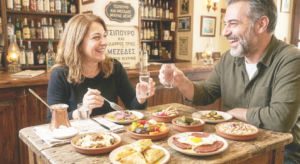
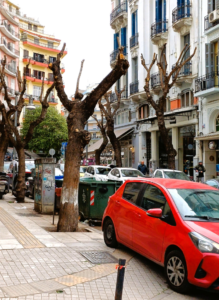
If you are wandering through the historic alleys of Thessaloniki, you will quickly realize that the city’s soul is best discovered through its stomach. Among the myriad of aromas wafting from local tavernas, one of Thessaloniki’s culinary traditions stands above the rest: Politiki Kouzina (the “Cuisine of the City”).
This unique gastronomic heritage belongs to the Greeks of Constantinople (modern-day Istanbul) and Asia Minor. It represents a sophisticated “urban” cuisine that masterfully blends Byzantine foundations with opulent Ottoman influences and vibrant Eastern spices.
Why Politiki Kouzina is a Must-Try for Travelers
While most Mediterranean diets focus on simple, fresh ingredients, Politiki Kouzina introduces an element of Eastern refinement and complexity. Following the Asia Minor Catastrophe in 1922, Greek refugees brought these secret family recipes to Thessaloniki, forever transforming the city into Greece’s undisputed culinary capital.
For history buffs and foodies alike, tasting these dishes is like taking a stroll through a centuries-old spice market.
Key Characteristics: A Symphony of Spices and Technique
What exactly sets this cuisine apart? It is all about the balance of sweet and savory, a signature style that creates deep, lingering flavors.
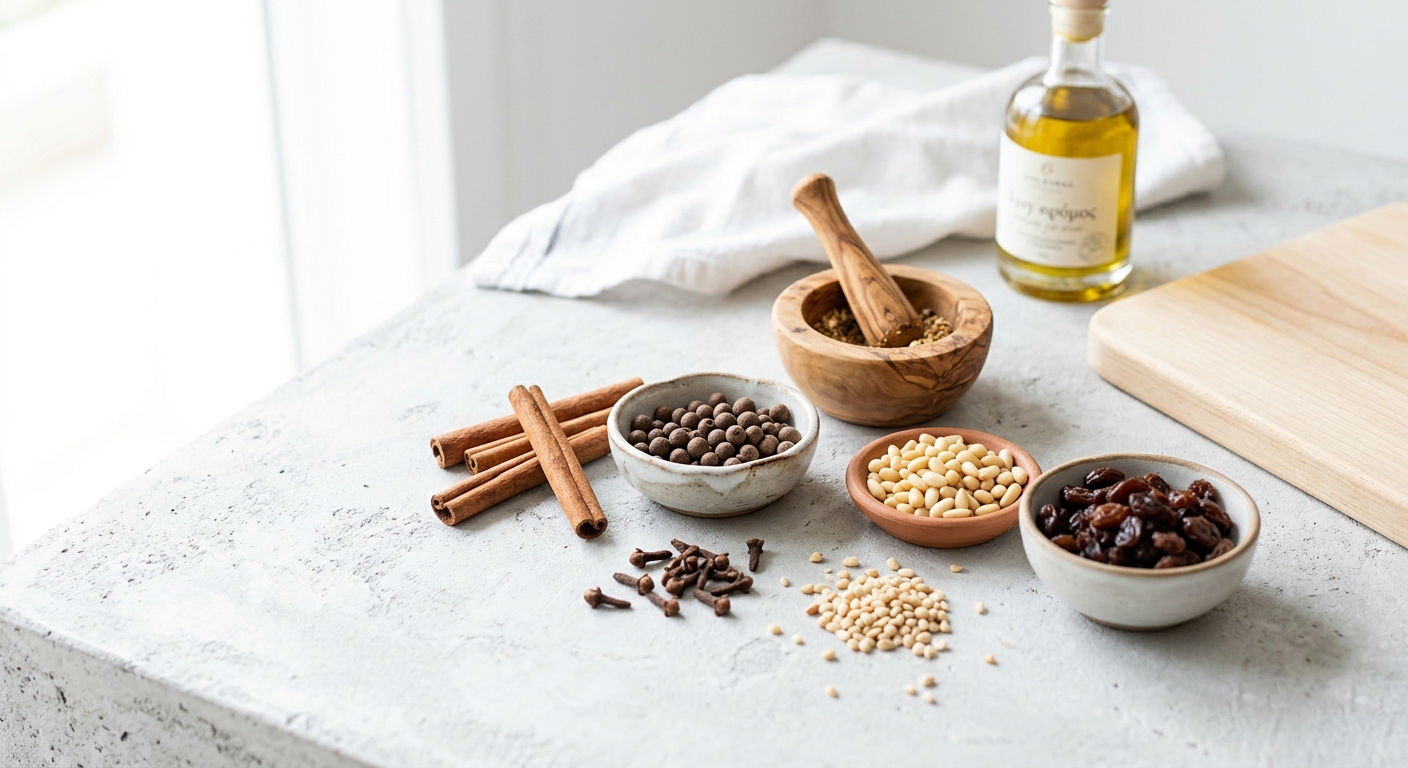
- Signature Aromas: Chefs liberally use cinnamon, allspice, cloves, and mahleb. You will frequently find pine nuts and raisins adding texture and sweetness to savory meat dishes.
- The Art of Ladera: This technique involves simmering vegetables in high-quality olive oil. Locals often serve these “ladera” dishes cold as refreshing appetizers or mezedes.
- The Meze Culture: Small plates define the social dining experience. Don’t miss the stuffed vine leaves (dolmades), cured mackerel (tsirosalata), or the buttery, salted bonito known as lakerda.
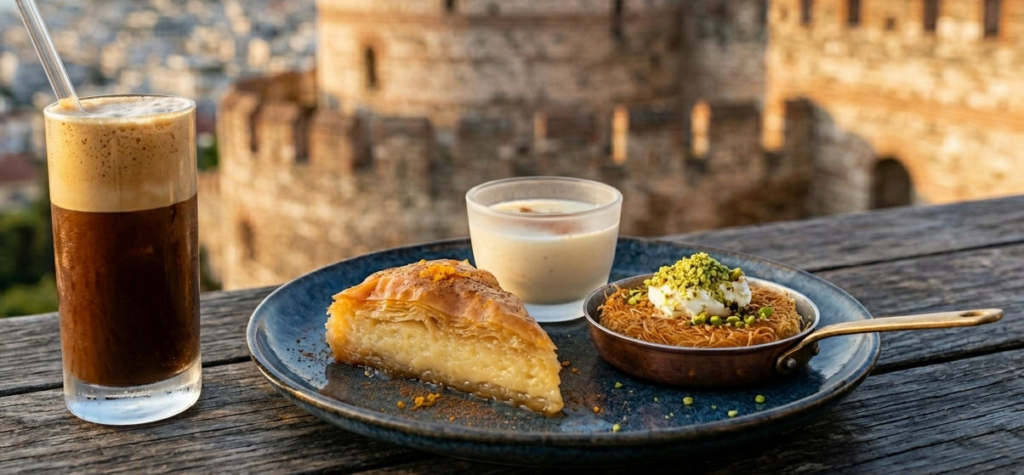
- Exquisite Desserts: The “City” is famous for its sweet tooth. You can indulge in syrup-soaked siropiasta, creamy almond puddings (keskül), or the iconic kunefe.
The Best Thessaloniki Dishes You Cannot Miss: A Taste of Politiki Kouzina
When you sit down at a traditional Thessaloniki eatery specialized in Politiki Kouzina, look for these authentic dishes on the menu:
- Politikos Moussakas: Unlike the standard version, this recipe often skips the heavy béchamel. Instead, it highlights rich butter and perfectly caramelized onions for a more intense flavor.
- Stuffed Pepper Dolmades: Instead of being baked, these peppers are slowly braised in a pot to keep them moist and tender.
- Peinirli & Lahmacun: These traditional dough-based delights feature boat-shaped crusts or thin flatbreads topped with spiced minced meat and melting cheese.
- Politiko Halva: A semolina-based dessert that uses toasted nuts and cinnamon to create a comforting, aromatic finish to any meal.
- Soutzoukakia Smyrneika: Heavily spiced meatballs.
- Hünkar Beğendi: Smoked eggplant purée topped with slow-cooked lamb.
- Tsoureki: The aromatic brioche-like bread.
- Keskül: A traditional almond-based milk pudding.
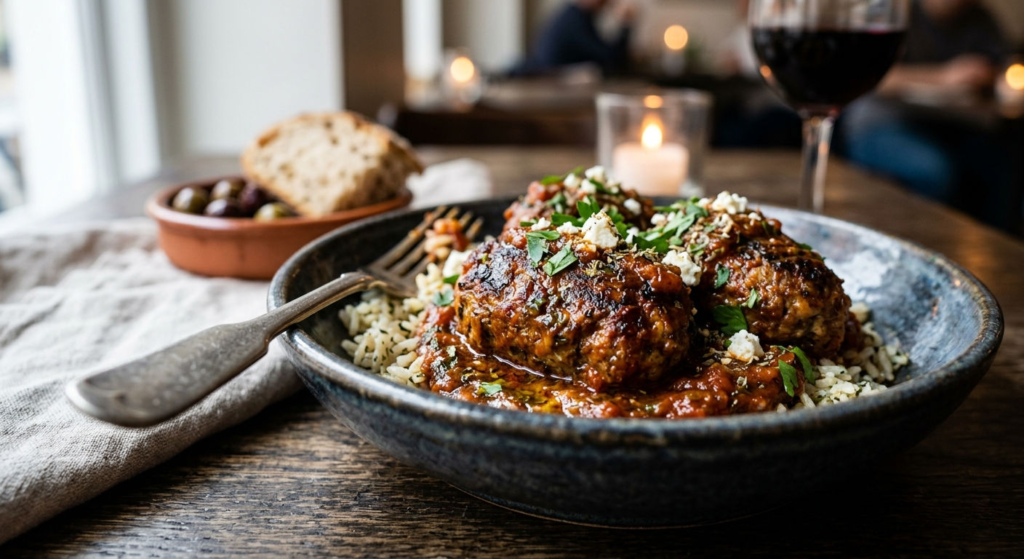
the difference between the Byzantine Heritage of Thessaloniki’s gastronomy and the Politiki Kouzina
The term Politiki Kouzina refers specifically to the culinary traditions of Constantinople. Since Constantinople was the capital of the Byzantine Empire, “Politiki” cooking is essentially the evolved, more refined descendant of the Byzantine food culture.
The Byzantine Heritage refers to the ancient techniques and ingredients (like the fish sauces, the Lenten seafood dishes, and the original doughs) that were common across the entire Empire, including Thessaloniki.
Politiki Kouzina is a more specific “fusion” style that blossomed in Constantinople. It incorporates those Byzantine foundations but adds the luxury of the Ottoman Sultan’s palace, a heavier hand with expensive spices (like mahlep and mastic), and the influences of the various ethnic groups (Greeks, Armenians, Jews) living in the capital.
Exploring Thessaloniki’s gastronomy further
Politiki Kouzina offers a delicious window into the city’s multicultural past. We have handpicked a few of the most popular restaurants in Thessaloniki specializing in this cuisine.
If you want to try these recipes yourself, visit the Kopiaste website by Ivy Liacopoulou. There, you will find authentic dishes rooted in Thessaloniki’s Byzantine heritage and the rich traditions of Politiki Kouzina.