The Byzantine Soul of Thessaloniki’s Food Scene: A Culinary Journey Through Time
When you stroll through the vibrant streets of Thessaloniki, the scents of roasting coffee and fresh pastries are impossible to ignore. While many travelers recognize the Ottoman and Sephardic Jewish influences on the city’s palate, the foundational layer of Thessaloniki’s cuisine actually dates back much further.
The Byzantine Empire (330–1453 AD) laid the groundwork for the city’s status as a culinary capital and the Politiki Kouzina (“Cuisine of the City”). Although centuries have passed, the Byzantine influence remains a hidden thread woven into the fabric of modern Greek cooking. From street food staples to complex spice blends, here is how the Byzantine era still shapes your plate in Thessaloniki today.
The Original Street Food: Koulouri and Bougatsa
Byzantine urban life thrived on high-quality, convenient snacks, establishing a “grab-and-go” culture that persists in Thessaloniki’s modern life.
- Koulouri: You will see street vendors at every corner selling these sesame-crusted bread rings. Interestingly, the name koulouri stems from the Byzantine Greek word kollyra. Just as they did over a millennium ago, locals still rely on this simple, crunchy snack to start their day.
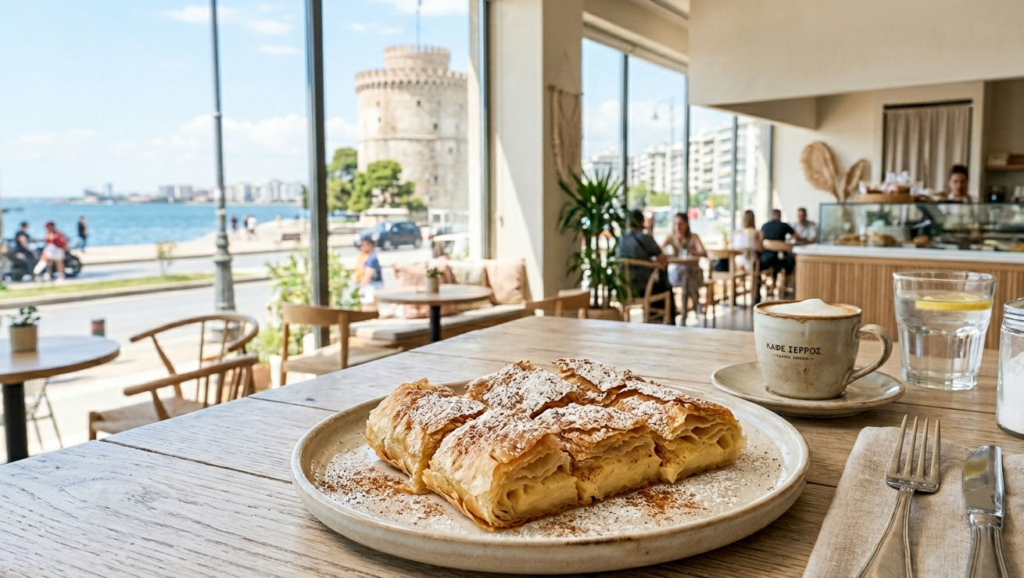
- Bougatsa: While the name bougatsa has Turkish roots, the technique of layering thin dough with cheese or custard originates in Byzantine kitchens. It evolved from ancient dishes like plastos and tyropita. Today, Thessaloniki remains the “capital of bougatsa,” keeping this Byzantine-inspired pastry tradition alive and well.
A Fusion of East and West: The Spice Revolution in Thessaloniki’s Gastronomy
As the second most important city in the Empire after Constantinople, Thessaloniki acted as a bridge between Europe and Asia. Consequently, this is where “fusion” cooking in Thessaloniki’s cuisine truly began.
Because the Byzantines controlled the major Eastern spice routes, they introduced cinnamon, nutmeg, and cloves to local kitchens. Unlike the simpler seasoning of the Ancient Greeks, Byzantine food was bold and aromatic. You can still taste this legacy today in soutzoukakia—oblong, spiced meatballs that rely heavily on cumin and cinnamon for their signature flavor.
Sweet and Savory: Meat with Fruit
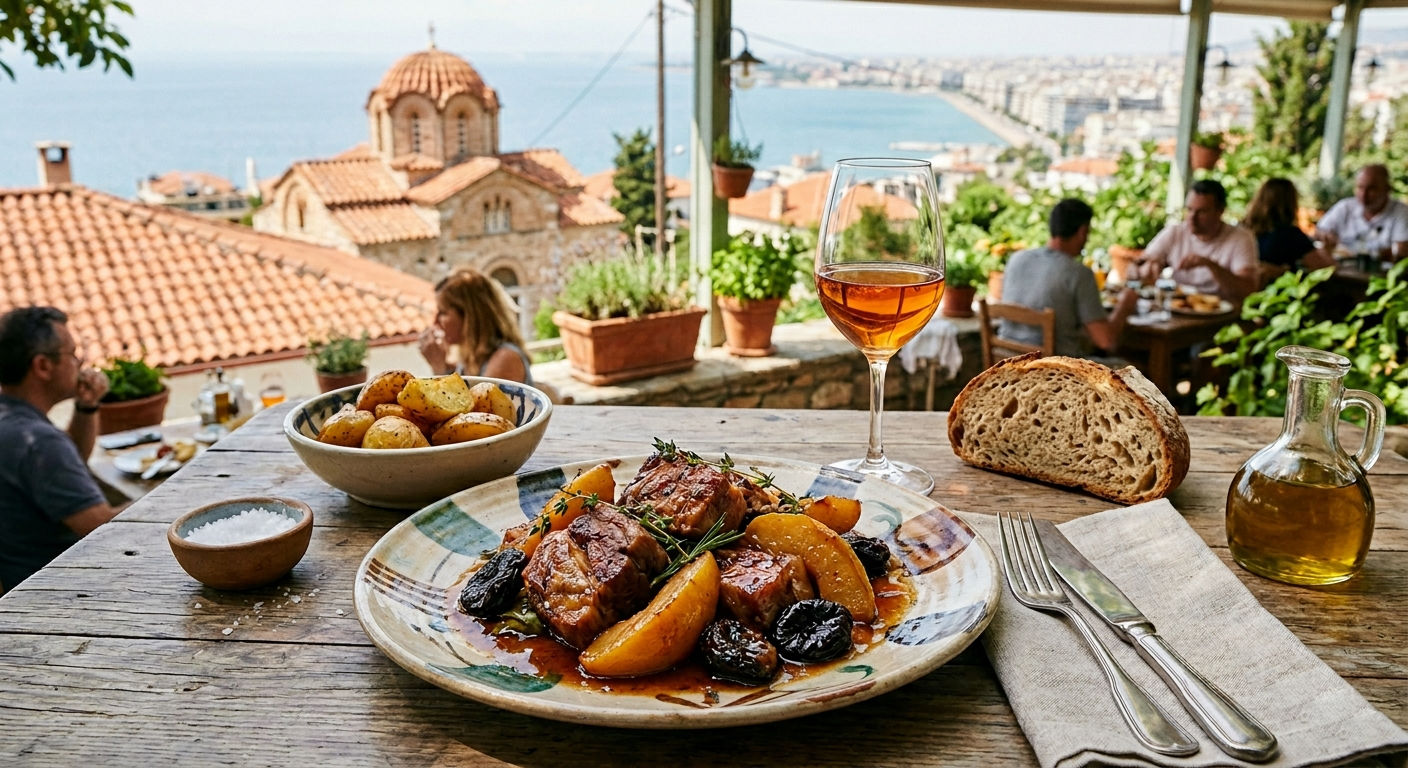
A distinctive hallmark of the Byzantine kitchen was the art of pairing meat with fruit. While this might sound modern or “gourmet,” it has been a local specialty for centuries. In the regions surrounding Thessaloniki, you will still find traditional tavernas serving pork cooked with quinces or plums, a direct culinary descendant of the Imperial dinner table.
From Garum to Mezedes: The Evolution of Salted Fish
In the 5th century BCE, Greeks used a fermented fish sauce called garos. The Romans later adapted this into the famous garum, a staple used by all social classes as a salty flavor enhancer, much like modern soy sauce.

As the Byzantine Empire declined, the use of liquid fish sauce faded, but the craving for salty, preserved seafood remained. This taste evolved into the salted and cured fish (such as skoumbi or lacarda) that you see on every meze platter, one of the most popular small dishes of Thessaloniki’s food culture today.
Master Cheesemakers and Preservation Pros
Byzantine merchants perfected meat curing and preservation out of necessity for long-distance trade. They developed techniques for salting meat and preserving it in its own fat—methods still used in Northern Greek charcuterie.
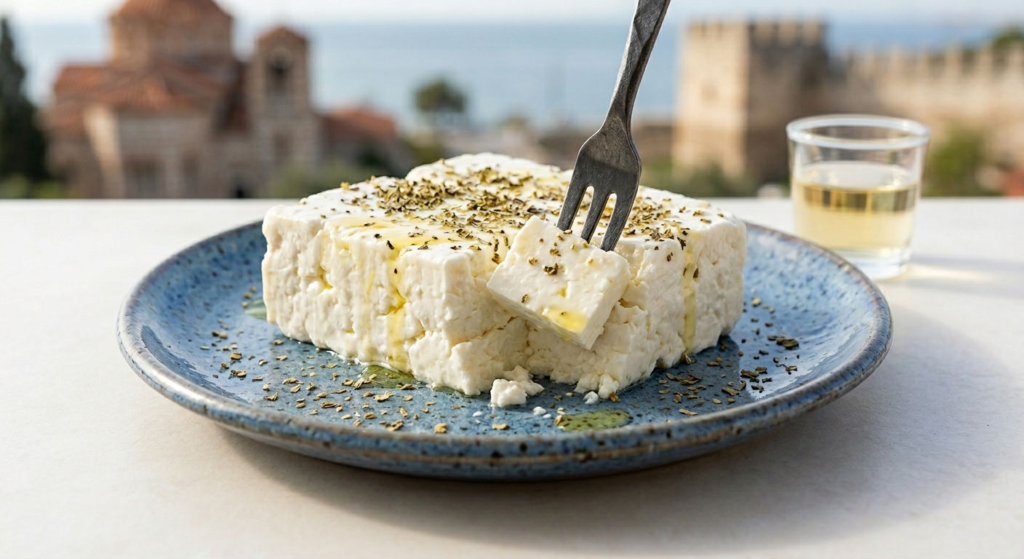
Furthermore, the Byzantines were master cheesemakers. Many of the iconic Greek cheeses we love today, including Feta, Anthotyro, and Kefalotyri, were staples produced throughout the Empire. When you enjoy a slice of salty Feta in Thessaloniki, you are literally tasting Byzantine history.
Faith on the Plate: Thessaloniki Food & The Lenten Kitchen
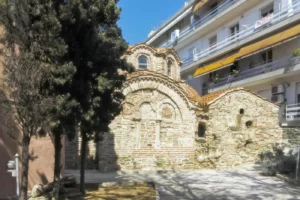
Thessaloniki’s identity is inseparable from its numerous Byzantine churches. Historically, the liturgical calendar dictated Thessaloniki’s food, with strict fasting rules forbidding meat and dairy for over 180 days a year.
Because of these restrictions, local cooks became incredibly creative with seafood and legumes. This “Lenten Cuisine” led to the development of complex bean stews and innovative shellfish dishes that remain centerpieces of the city’s diet today.
The Spirit of the Monks: Tsipouro
Finally, you can’t fully experience Thessaloniki’s gastronomy without tasting Tsipouro, the potent pomace brandy that fuels the city’s social life. We owe this spirited tradition to the Byzantine monks of Mount Athos. These monks were the first to master the art of distillation, creating a drink that transitioned from the monastery to the mainstream, eventually becoming the heartbeat of the modern Greek tsipouradiko.
Traveler’s Tips to fully experience the UNESCO City of Gastronomy Thessaloniki
To truly experience these Byzantine roots in Thessaloniki’s cuisine, look past the modern storefronts. Visit the Modiano or Kapani markets, where the barrels of olives, slabs of salted fish, and aromatic spice stalls offer a sensory portal back to the days of the Byzantine Empire.
If you don’t want to prepare any Byzantine Greek food yourself, take a look at this article about the best restaurants in Thessaloniki with a Byzantine inspired menu.