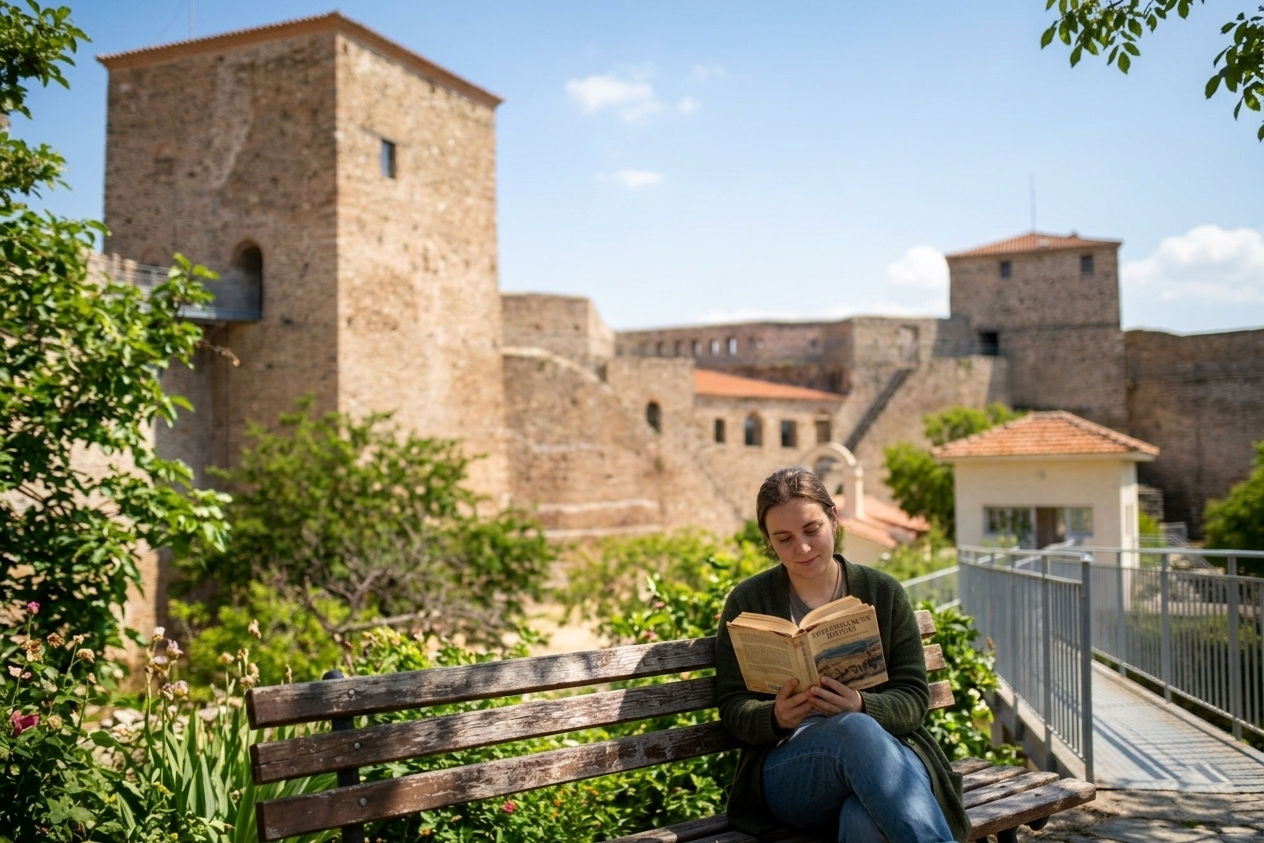
The Byzantine Walls: Exploring the “Shield” of Thessaloniki
If you’ve ever stood at the waterfront in Thessaloniki and looked up toward the hills, you’ve seen them: the massive, sun-drenched old walls of Thessaloniki, locally known as the Kastra (Castles). You can certainly visit this beautiful area of the Upper Town (Ano Poli) by walking up the steep hills. However, you can also get there by bus. This article gives information about both.
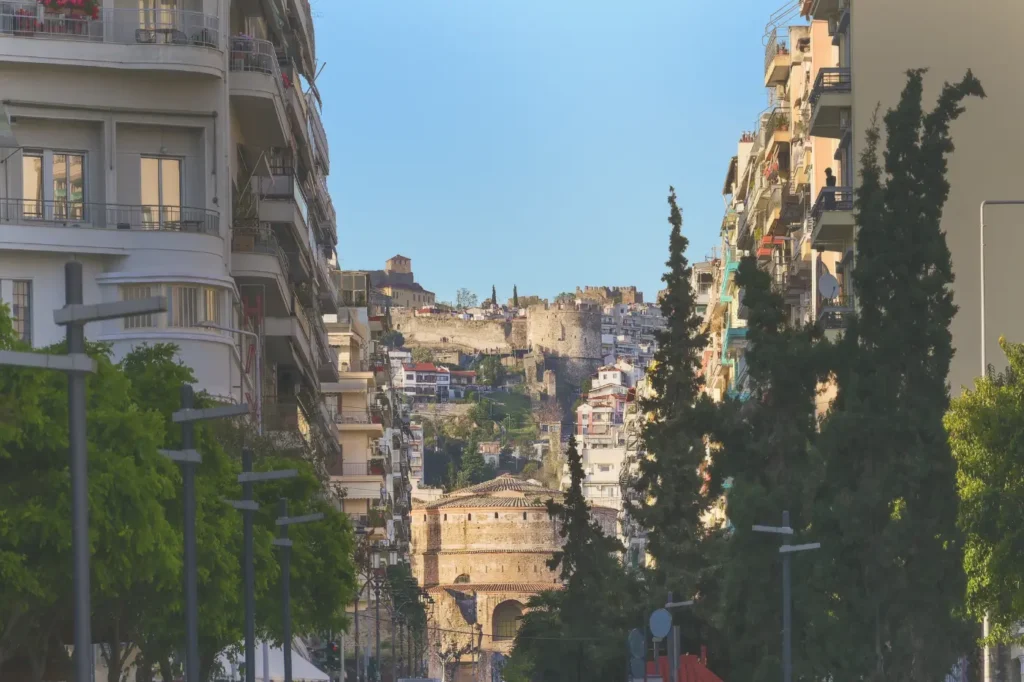
For over 1,600 years, the ancient walls of Thessaloniki served as the literal “shield” of the Byzantine Empire in the Balkans, but today they are the ultimate destination for travelers who love sightseeing in Thessaloniki. Especially if you want to dive deep into Roman, Byzantine, and Ottoman history. Let’s discover the ancient walls of Thessaloniki, the most unique sight of the UNESCO monuments in Thessaloniki.
Thessaloniki Old Walls History: From Cassander to the Ottomans
The city’s defensive history is a story of constant adaptation. However, the old walls of Thessaloniki were not built in a single era, instead, they are a living timeline of Mediterranean warfare.
Although the city’s founder, King Cassander, commissioned the original walls in 316 BC, the towering structures you see today are primarily from the Late Roman and Early Byzantine periods (late 4th to 5th century AD).
Interesting Things to know about the Byzantine Walls of Thessaloniki
The “Sandwich” Technique
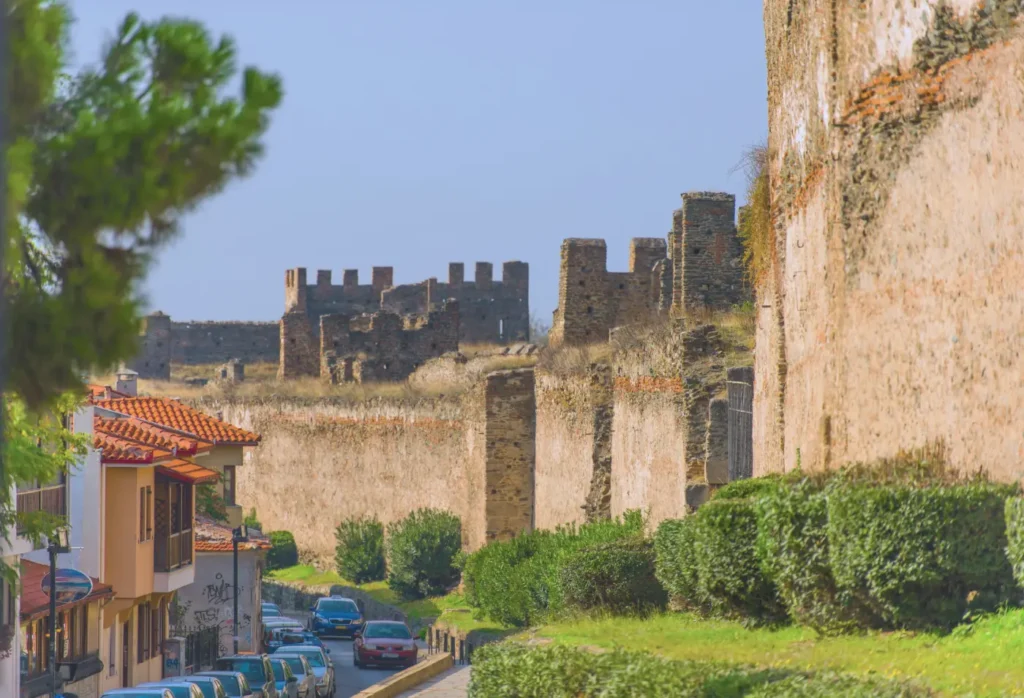
When you look closely at the masonry of the Byzantine walls, you’ll see layers of stone bonded with thick bands of red brick. This wasn’t just for aesthetics; these brick bands provided vital flexibility, allowing the old walls of Thessaloniki to sway during earthquakes rather than crumble.
The Circuit
At its peak, the Byzantine walls of Thessaloniki formed a giant rectangle 8 kilometers long, standing 12 meters high and 5 meters thick.
The Defense System
It wasn’t just one wall. There was the Main Wall, and then the Proteichisma, an outer, lower wall designed to slow down attackers under a hail of arrows before they could even reach the main gates.
Thessaloniki’s Saint Dimitrios
During the Avar and Slavic sieges (6th–7th Century), legend says the patron of Thessaloniki, Saint Dimitrios, appeared on the old walls of Thessaloniki and personally fought off invaders.
Pirates from Crete
Thessaloniki’s greatest tragedy occurred when pirates from Crete realized the Sea Walls were lower and weaker than the land walls. They scaled them, leading to a brutal massacre and the enslavement of 22,000 citizens.
The “Kastra” of Thessaloniki (Heptapyrgion)
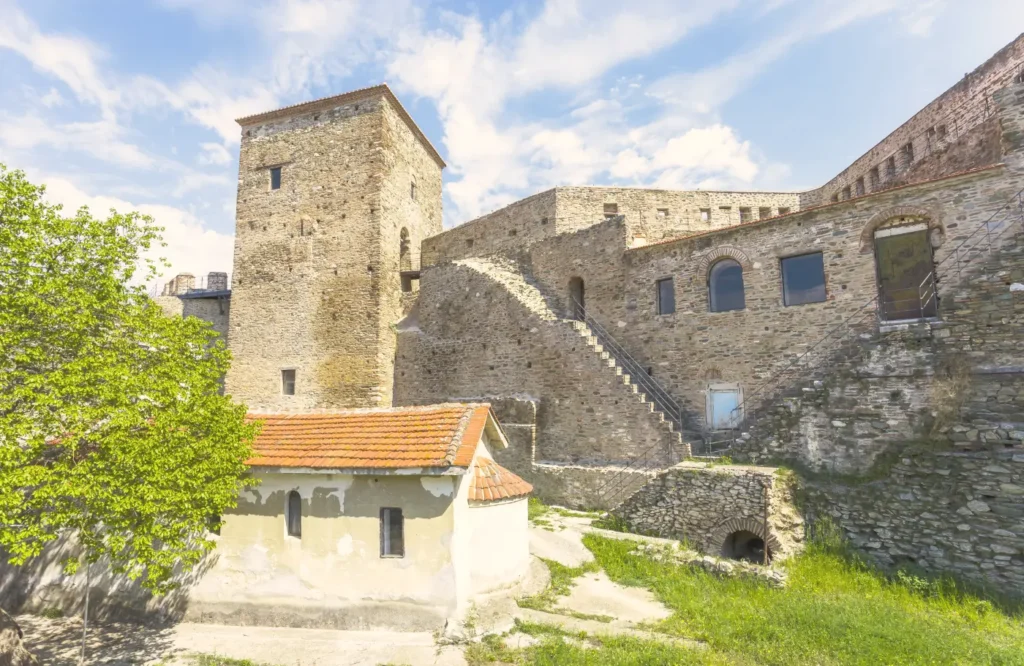
The Kastra or Heptapyrgion, in Turkish called Yedi Kule, are located at the highest point of Thessaloniki’s Upper Town (Ano Poli). Following the Ottoman conquest, the Byzantine fortress of Thessaloniki was rebuilt and strengthened in the 1430s to serve as a garrison commander’s seat.
In the late 19th century the Ottomans converted the Eptapyrgio Fortress into a prison.
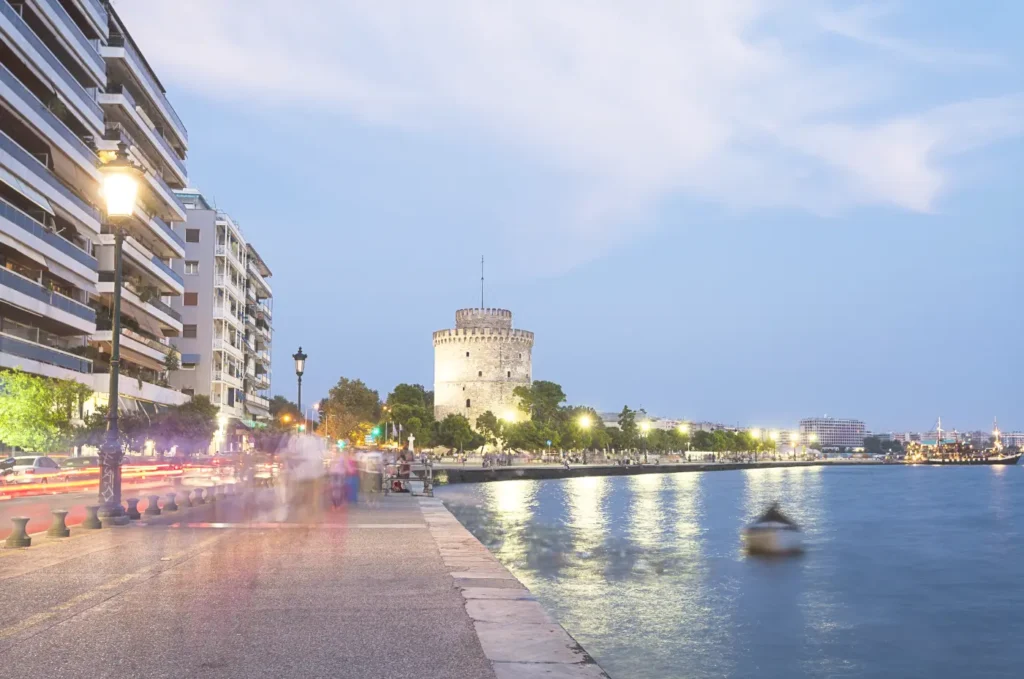
The White Tower
The White Tower is one Thessaloniki’s key landmarks. It sat at the intersection of the land and sea walls. For centuries, the White Tower was known as the “Tower of Blood” because it served as a grim prison and execution site. It was only whitewashed in 1912 after the city’s liberation to symbolically “cleanse” its dark past.
Sea Wall Thessaloniki
A separate section of the old walls of Thessaloniki once ran along the waterfront to protect against naval invasions. In order to “beautify” the city and to allow for better air circulation, the Ottomans decided in the late 19th century to demolish the sea walls of Thessaloniki.
The Spolia
Byzantine builders were the original recyclers, therefore you find marble blocks from Roman temples or ancient theaters embedded directly into the wall’s brickwork.
Byzantine Inscriptions
Near the Trigonion Tower, you can find inscriptions attributed to the Byzantine governors who funded specific repairs.
Kastroplikta
Look for the tiny houses (kastroplikta) built directly into and against the old walls of Thessaloniki. After the population exchange in 1922, Greek refugees from Asia Minor and the Black Sea areas (current Turkey) came to live in Ano Poli. They used the fortifications as the foundations for their new homes.
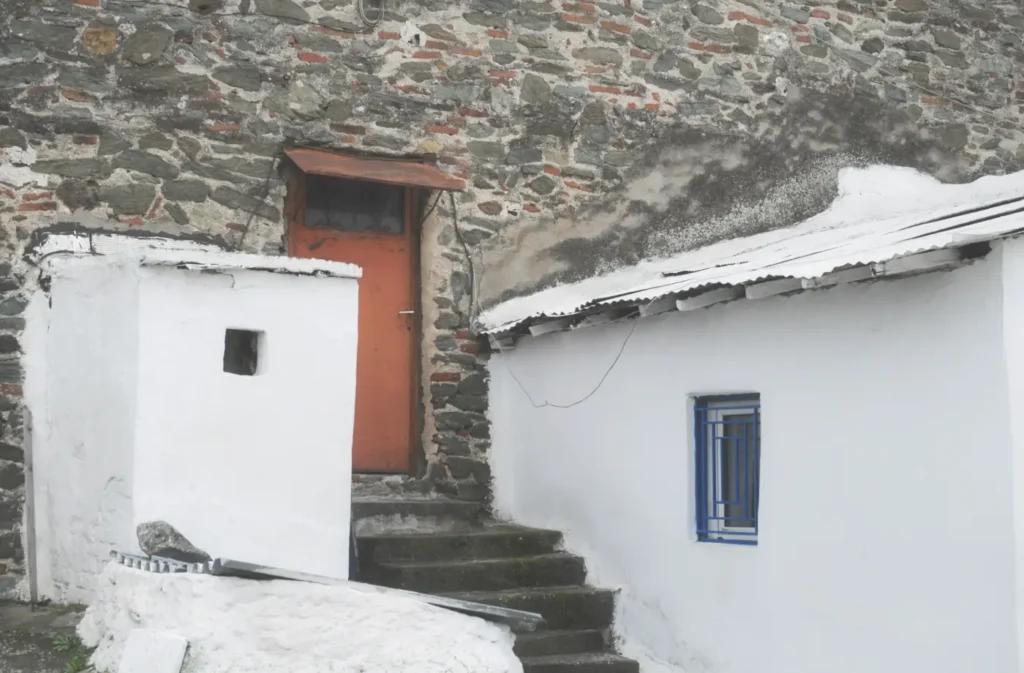
the locations of The old Walls of thessaloniki
The Old Walls in Upper Town
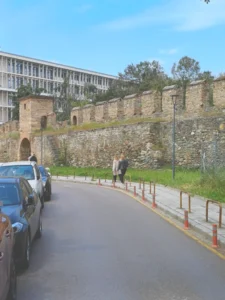
Only about 4 kilometers of the remaining Byzantine walls of Thessaloniki have survived. The largest, uninterrupted section is located in the north of the Upper Town.
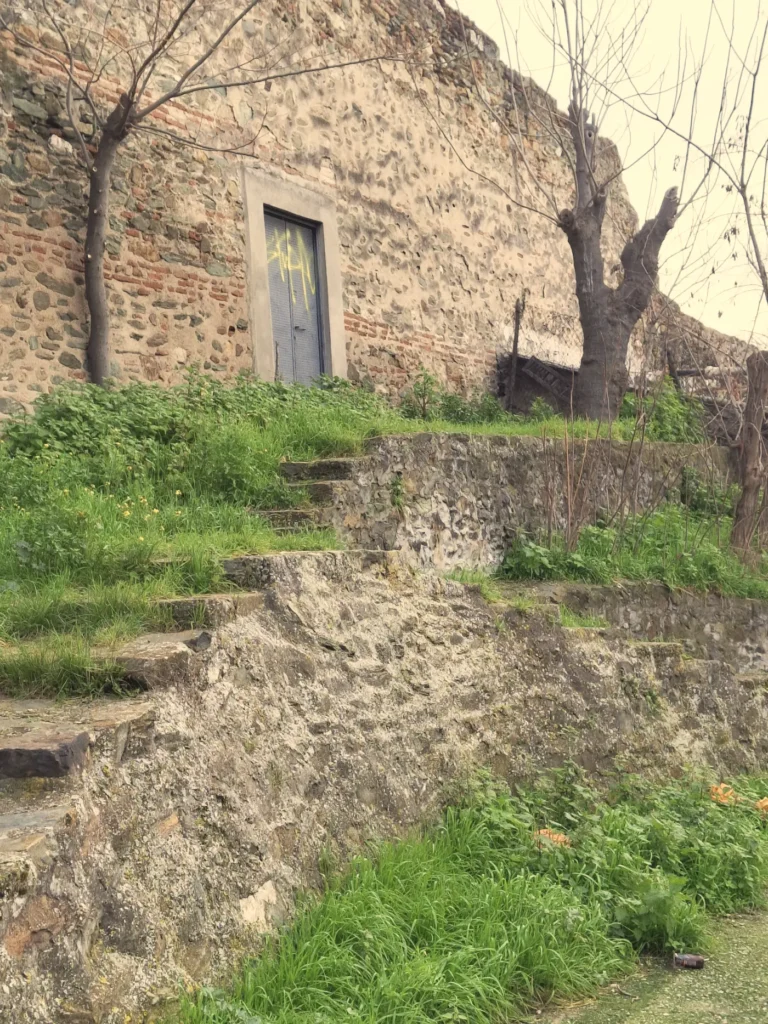
Walls Scattered throughout Upper Town
If you want to find other sections of the Byzantine walls of Thessaloniki, you will have to walk through the Upper Town. Remains of the walls are scattered throughout this historic district of Thessaloniki. As the old walls of Thessaloniki used to run down from Ano Poli until the waterfront at the west and the east side of the city, you will find remains at the west and east sides of Ano Poli (Upper Town).
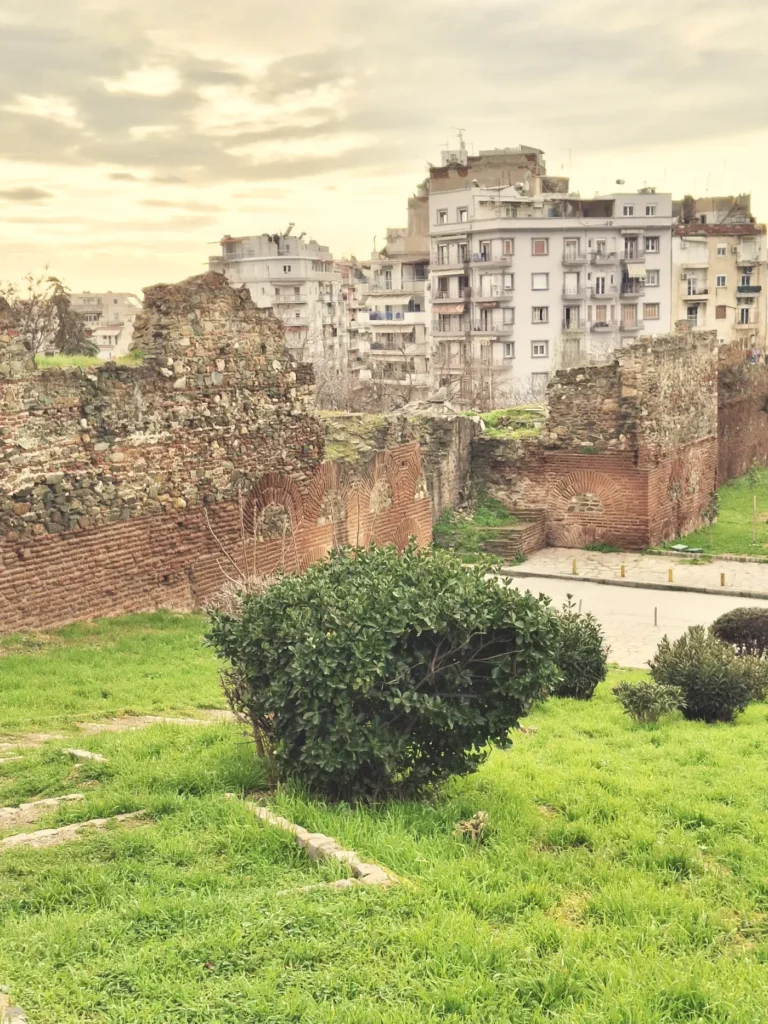
The Western walls of Thessaloniki
There are other sections of the walls visible in the lower parts of the city. For example, near where the Golden Gate (or Vardar Gate) was located. Because this is where the Via Egnatia began, it was the grand entrance of Thessaloniki, connecting Rome all the way to Constantinople.
Fortress of Vardari & Western Walls
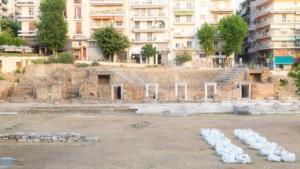
While the Golden gate was demolished in the late 19th century to modernize the city and widen the roads, you can still see the Fortress of Vardaris (the Top Hane) and a section of the western walls just a few steps away. The fortress and the walls used to be connected to the Golden Gate.
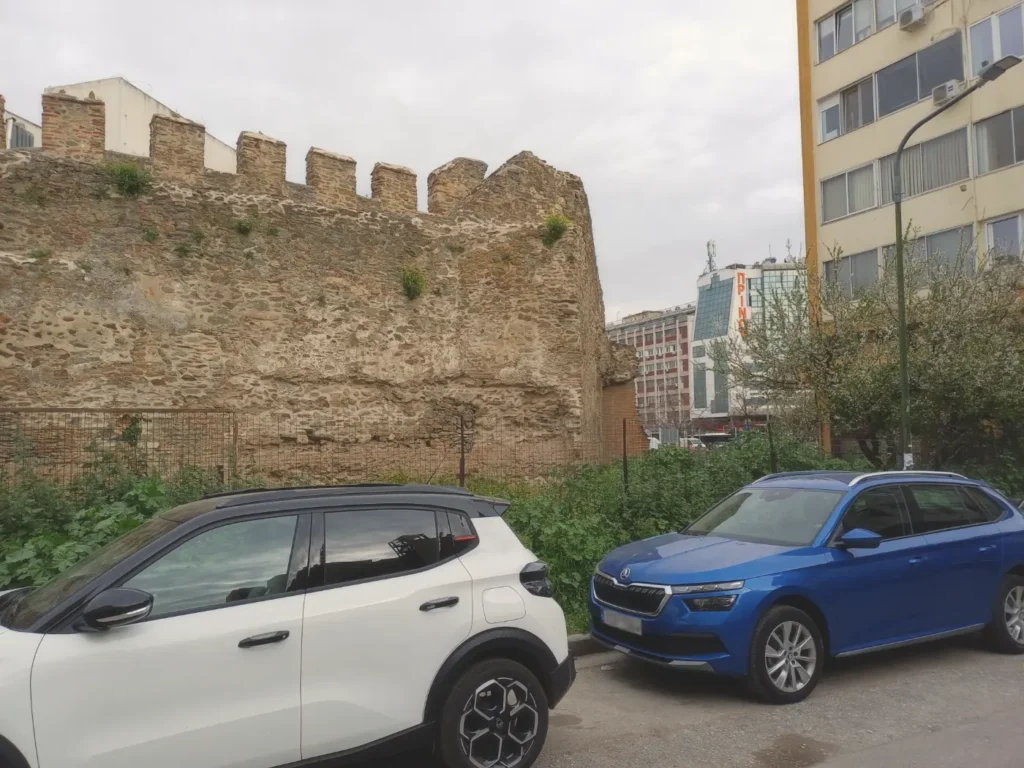
They are located southwest of the courthouse, near Dimokratias Square (also called Vardaris Square). Unfortunately, they are not as well preserved as you would expect, but nevertheless they are of incredible historic value and you can visit them.
Tips for the Thessaloniki Upper Town “Wall Walk”
While, walking through the Upper Town and descending its hills you will encounter the remaining 4 kilometers of the original 8-kilometer of the old walls of Thessaloniki. The northern section is best preserved, while other parts of the walls are scattered throughout Ano Poli. The best way to experience them is to wander through the narrow, cobblestone streets of Ano Poli.
Where to start your walk?
The best way to start your walk is at the Heptapyrgion fortress (the “kastra”) and walk downhill along the eastern wall toward the Trigonion Tower. This ensures you have the best views of the Thermaic Gulf in front of you the whole time. As mentioned before, you can walk up the steep hills to get to the kastra or you can take one of the buses that depart from the Thessaloniki city center.
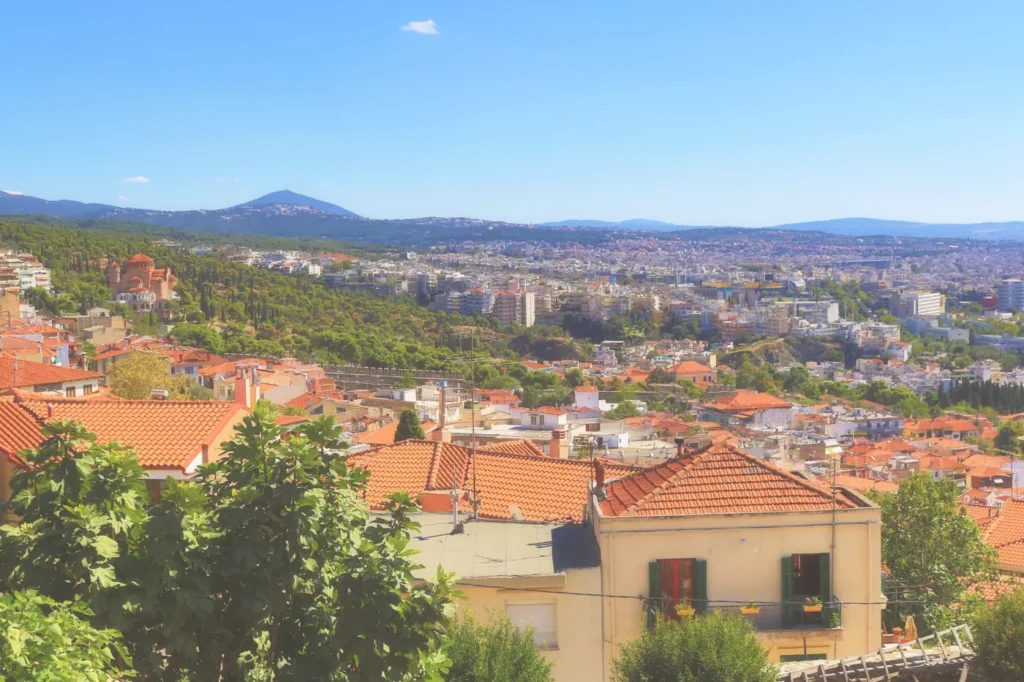
The Best Sunset of Thessaloniki
Start your walk at the Heptapyrgion of Thessaloniki about 90 minutes before sunset and work your way down to Trigonion Tower for the main event.
Footwear
Because the streets are made of historic, often slippery cobblestones it’s best to leave your sandals or high-heels at your hotel or airbnb and wear shoes with a good grip.
The Essential Stops on Your Walk through Ano Poli
During your walk along the northern walls of the Upper Town, you will encounter several UNESCO heritage sites that are a very short distance from each other.
Heptapyrgion fortress of Thessaloniki
This massive fortress offers a chilling but fascinating look at the city’s military and carceral history. The grounds feature multiple towers overlooking the city’s acropolis.
Trigonion Tower
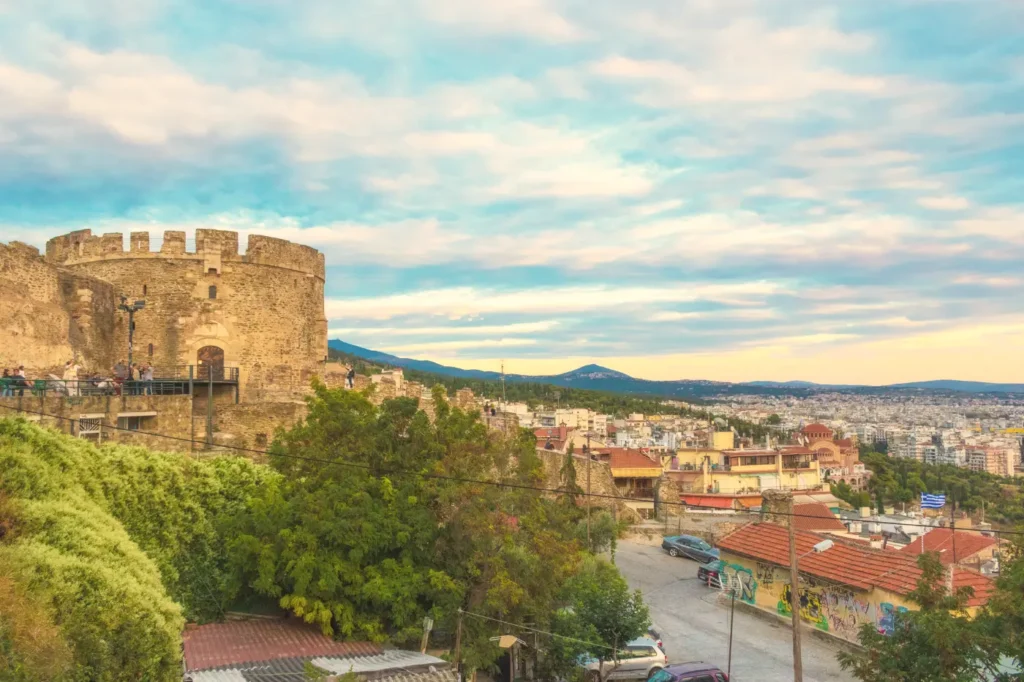
The Trigonion Tower is often called the “Triangle Tower” (even though its shape is circular!) and it’s arguably the city’s most beautiful balcony.
A short walk from the Heptapyrgion fortress leads you to this massive circular tower. The view from here, which stretches across the red rooftops of Ano Poli to Mount Olympus in the distance, is arguably one of the best in Greece.
Vlatadon Monastery
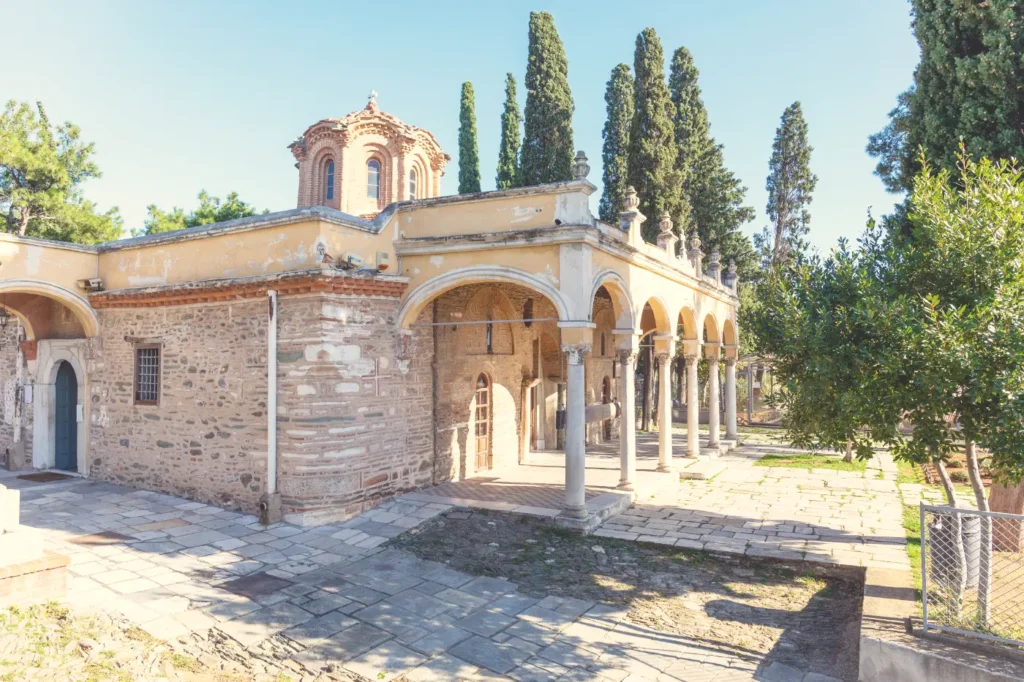
Situated just below the old walls of Thessaloniki, this 14th-century site is the only Byzantine monastery in the city that has remained active to this day.
You can enjoy the hilltop courtyard of the Vlatadon Monastery with its peacocks. It is a serene spot to escape the city bustle. Inside the monastery you can admire the centuries-old frescoes and religious treasures.
Authentic Flavors of Ano Poli
When you are walking the steep hills of the Upper City you will definitely work up an appetite. Luckily, the immediate neighborhood around the Byzantine Walls of Thessaloniki and the Heptapyrgion fortress is home to some very good restaurants and taverns. We selected some of them with the best views and reviews!
Byzantio Skybar & Bistro
Directly across from the ancient walls sits Byzantio Skybar & Bistro, featuring a panoramic roof terrace that offers sweeping views over Thessaloniki and the shimmering Aegean Sea, hence an ideal spot for a scenic lunch after visiting the Eptapyrgio.
Address: Eptapirgiou 102, Thessaloniki 546 34
Nifty Roots
This establishment is directly beside one of the ancient towers of Heptapyrgion. Nifty Roots offers an unforgettable experience because of its cozy atmosphere, exceptionally friendly staff and tasty food.
From the tiny terrace, you can practically reach out and touch the fortress stones while your eyes wander across the rooftops of Thessaloniki to the distant blue of the AegeanSea.
Address: Kiprou 2, Ag. Pavlos 554 38
Brusco Meze Bar
Brusco Meze Bar is another hidden gem where you can enjoy your food. It is located next to the walls of the Upper Town.
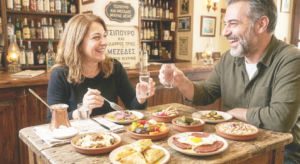
You must try the Bouyiourdi. This is a traditional dish in Thessaloniki and is a blend of feta cheese, yellow cheese, tomatoes, bell pepper, chili pepper, olive oil, oregano, and ground pepper.
They serve traditional Greek food of high-quality ingredients overlooking the fortifications from their terrace.
Address: Stergiou Polidorou 61, Thessaloniki 546 34
Buses to the Old walls of thessaloniki in ano poli
While walking to the Upper Town is absolutely possible it involves steep uphill climbs. Taking the bus is an alternative for reaching sites like the Walls and Heptapyrgion (Yedi Kule) fortress. The buses all leave from the center of Thessaloniki.
Line 22 (Ano Poli)
A circular route that operates daily, typically from 06:05 to 21:40, which is designed specifically to navigate the narrow alleys of the Upper Town.
Line 23 (N.S. Station – Sykies)
Connects the New Railway Station to the Sykies area, passing through major points in Ano Poli.
Line 24 (Eleftherias Sq. – Chilia Dendra)
Connects the city center (Eleftherias Square) to the Chilia Dendra area near the city’s old walls.
Cultural Line 50
A special tourist route that passes through major historical sites, including Ano Poli (typically at Stop 9: Keladis/Tower).
Bus App
Use the OASTH app for live updates of the scheduled arrival of the buses, information about routes and for purchasing tickets online or you can visit the OASTH website for more information about the buses in Thessaloniki.